Allow me to preface this review by stating that I enjoy every Star Wars film (yes, including The Phantom Menace and Attack of the Clones) and this was no exception. It was a highly entertaining romp that included many fun call-backs to service long-term fans of the franchise, from revisiting the ruins of the Death Star to seeing the return of Luke Skywalker’s X-Wing from A New Hope. That being said, The Rise of Skywalker suffered from indecision and inconsistency within itself and in the context of the Star Wars canon.
JJ Abrams was not expected to have further involvement in the reprised Star Wars series following his direction of The Force Awakens. This is painfully obvious in The Rise of Skywalker, which seems determined to disavow the developments of The Last Jedi – such as the romance between Finn and Rose, the use of force by laymen and Rae’s unspectacular parentage – in favour of a return to traditional form.
The Rise of Skywalker sees the return of Emperor Palpatine, who was believed to have been killed by Darth Vader in Return of the Jedi. While the return of a historical villain is itself indicative of the film being mired in the past, it is made more problematic given that it is revealed in the opening crawl, with no explanation of how it occurred, nor any comment on its significance.
In the course of the film, it is revealed that Rae is the granddaughter of Emperor Palpatine. This undermines the narrative development of The Last Jedi, which had sought to establish that Rae’s force ability was not genetic, thereby heralding the possibility that regular people could harness the power of the force. The Palpatine lineage also becomes a crux for poor storytelling, justifying underdeveloped plot points such as Rae’s proficiency with a lightsaber, despite her having no prior experience.
Additionally, The Rise of Skywalker suffered from the traditional flaws of most Disney films, being that there was a lack of stakes and that the desire to please the audience outweighed the need for narrative cohesion and originality. This was most evident in the multiple resurrections that occurred in the film, which robbed the audience of the opportunity to actually feel something.
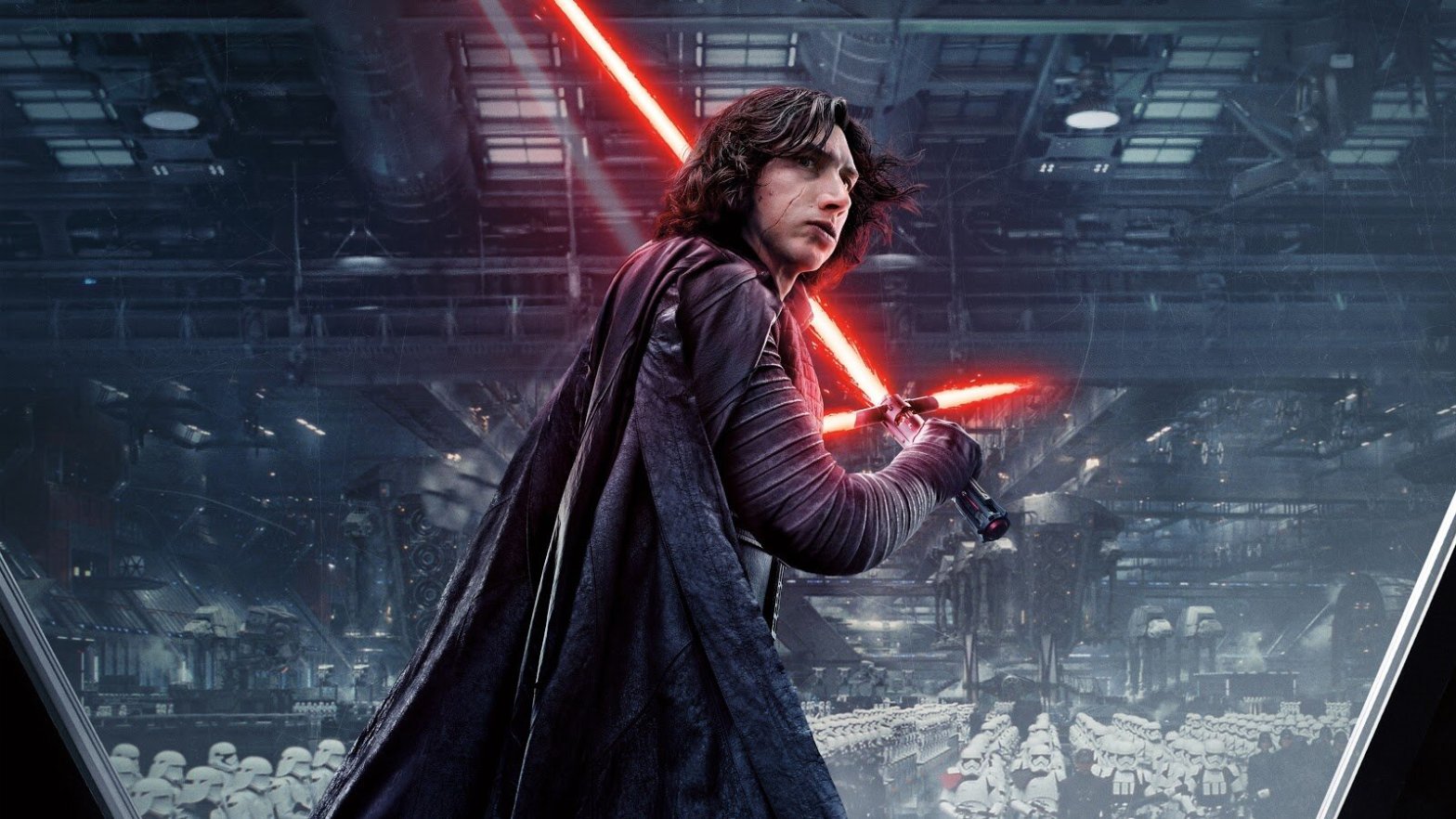
The Rise of Skywalker was at its strongest when it focused on the relationship between Rae and Kylo Ren, and this is perhaps true of each of the new films in the reprised triad. This can be attributed to the sense of interiority of the Kylo Ren character – he has dimensionality, which makes him the most interesting person in a film that is populated with many stagnant personalities. Adam Driver carries the narrative tension of the film, as it is Kylo Ren who is truly torn between the light side and dark side. This is why it is so satisfying when we see him wield a blue lightsaber when he joins Rae in her battle against Emperor Palpatine. That being said, I am unsure that his turn to the light was truly earned, having been prompted merely by hearing his mother call him “Ben”, his true name.
In spite of the above, even Kylo Ren is not safe from the broad strokes of fan-service inherent to a Disney movie. After Emperor Palpatine has been destroyed, Rae is dead and Kylo Ren has survived. In many other films, this could be considered a bittersweet and impactful ending, which acknowledges the importance of sacrifice. However, Disney is insistent that the “hero” be preserved. Accordingly, Kylo Ren uses his remaining life force to resurrect Rae and dies in her stead, bringing the story back within the Disney framework. I was pushed beyond mere annoyance and into a blind rage when Rae and Kylo began to kiss as he was dying, thereby confirming a romance that had been highly sought after by many Star Wars fans.
The sheer level of on-the-nose wish fulfillment displayed here speaks to the detrimental effect of social media on our culture, at least to the extent that artists pay heed to what is voiced on these platforms. Great art (and therefore great film) requires the creator to express their true nature in a singular, cohesive vision. When the audience is allowed to influence the creative process, their competing opinions and ideas result in a highly-fragmented and ultimately incoherent piece of work.
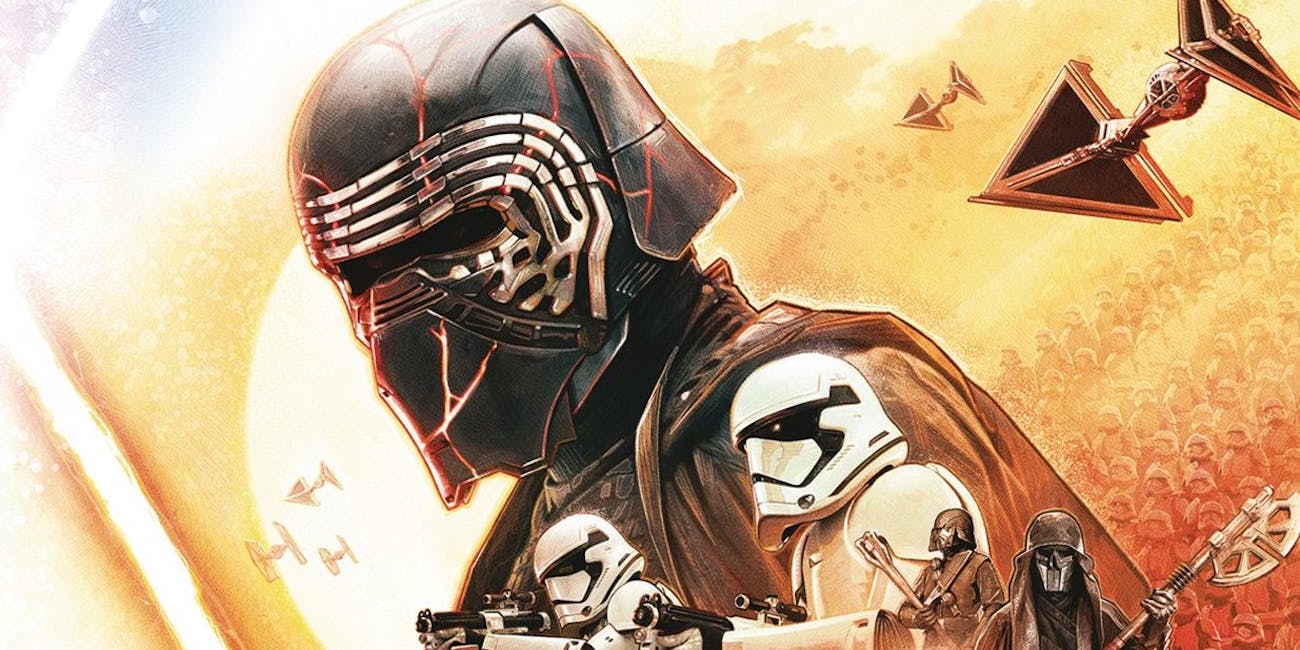
Overall, while The Rise of Skywalker is an enjoyable cinematic experience, I am disappointed by what feels like a missed opportunity to expand on the Star Wars universe narratively and conceptually. Abrams’ desire to return to the status quo is, rather comically, made physically manifest in the poor reconstruction of Kylo Ren’s helmet, which had been shattered in The Last Jedi.
This brings to mind Hannibal Lecter’s musings on entropy:
“you may see a cup of tea fall off a table and break into pieces…but you will never see the cup gather itself back together…the increase of disorder, or entropy, is what distinguishes the past from the future.”
The Last Jedi dismantled many of the assumptions that existed within the Star Wars canon and Abrams spends the entirety of The Rise of Skywalker attempting to reconstruct them. The law of entropy suggests things cannot be restored to their original state once they are broken. The Rise of Skywalker insists on trying to do this anyway, and this is why it is ultimately unsuccessful.
 View Kid