
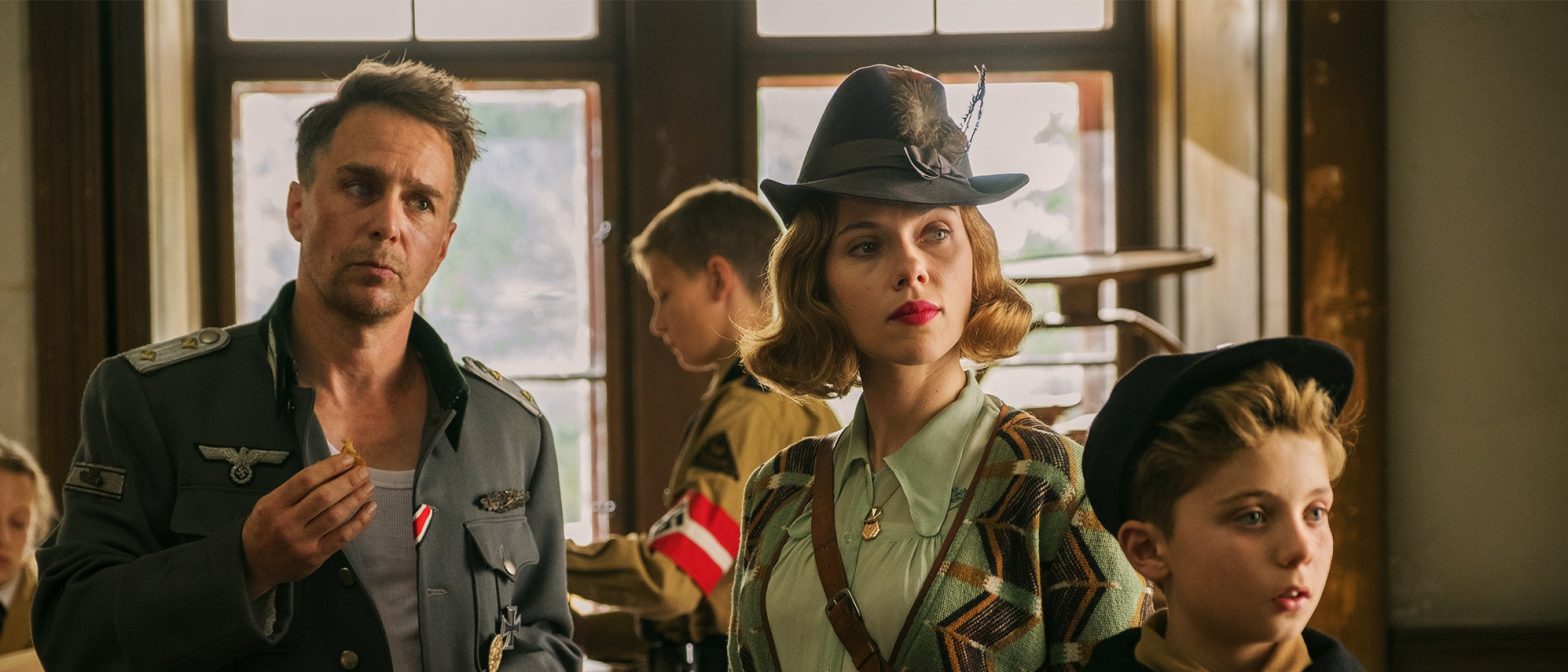
When I attempted to explain the plot of Jojo Rabbit to a friend of mine, they found it difficult to understand how the events of World War II could be framed as a comedy. “I hate Nazis” was their response. I was reminded that the use of an ironic tone can divide audiences between those who comprehend the nuances of meaning and those that don’t. For that reason, I appreciate that some viewers may confound the historical context of the film with what it’s actually about – overcoming hatred and tribalism.
Jojo Rabbit combines Taika Waititi’s absurdity with the whimsy of Wes Anderson, culminating in a film that is at once strange and familiar. Its “melancomic” tone, which offsets irony and affect with sincerity and pathos, is certainly an Andersonian construct, as is the use of anti-realist settings to give the film a contained and artificial quality.

However, Waititi differs dramatically from Anderson in the niceness and likeability of characters who, in Anderson’s hands, would most certainly have been depicted as precocious and self-centred. Accordingly, sympathy – particularly towards Jojo himself – is more strongly felt here than in any of Anderson’s films. This can perhaps be attributed to Waititi’s masterful ability to inhabit the head-space of a young boy. A memorable example is the following interaction Jojo has with his mother:
Rosie Betzler: Love is the strongest thing in the world.
Jojo Betzler: I think you’ll find that metal is the strongest thing in the world, followed closely by dynamite and then muscles.
The charming script is of course reliant on a wonderful performance by Roman Griffin Davis, who delivers the above line (as well as many others) with the absolute self-assuredness that young children possess.
Waititi has said that Fox agreed to distribute Jojo Rabbit on the condition that he portray Hitler, who is Jojo’s imaginary friend in this film. Waititi performs this role with commitment and zest. The character is so clearly a child’s understanding of who Hitler would be and is an evocative device for demonstrating how Jojo’s perception of the figure changes as the movie progresses. It is a window into Jojo’s interiority and understanding of the world around him. I particularly enjoyed watching the imagined Hitler become more menacing as Jojo learns more about the world. It reflects how we so often construct a vision of our idols, and how this changes based on our interactions and experiences.
Sam Rockwell and Alfie Allen gave strong performances as Captain Klenzendorf and Finkel, an eccentric pair who run the Hitler Youth training camp. I was particularly struck by how Captain Klenzendorf’s own disillusionment foreshadows the journey that Jojo himself will undertake . Meanwhile, Finkel’s character development can be observed in the periphery of many scenes, providing viewers with an enjoyable easter-egg type experience and lending a re-watchable quality to the film.
The decision to cast Stephen Merchant as a captain of the Gestapo was masterful. He is at once creepy and hilarious in this film- his very proportions lent his scenes a sense of physical comedy. In the theatre where I saw Jojo Rabbit, the audience began laughing as soon as he appeared on screen.
Jojo Rabbit is a success. It is hilarious and warm, and I will always hold a special place in my heart for a film that ends with children dancing awkwardly to Heroes, followed by an intriguing quote:
Let everything happen to you
Beauty and terror
Just keep going
No feeling is final
– Rainer Maria Rilke
 View Kid