
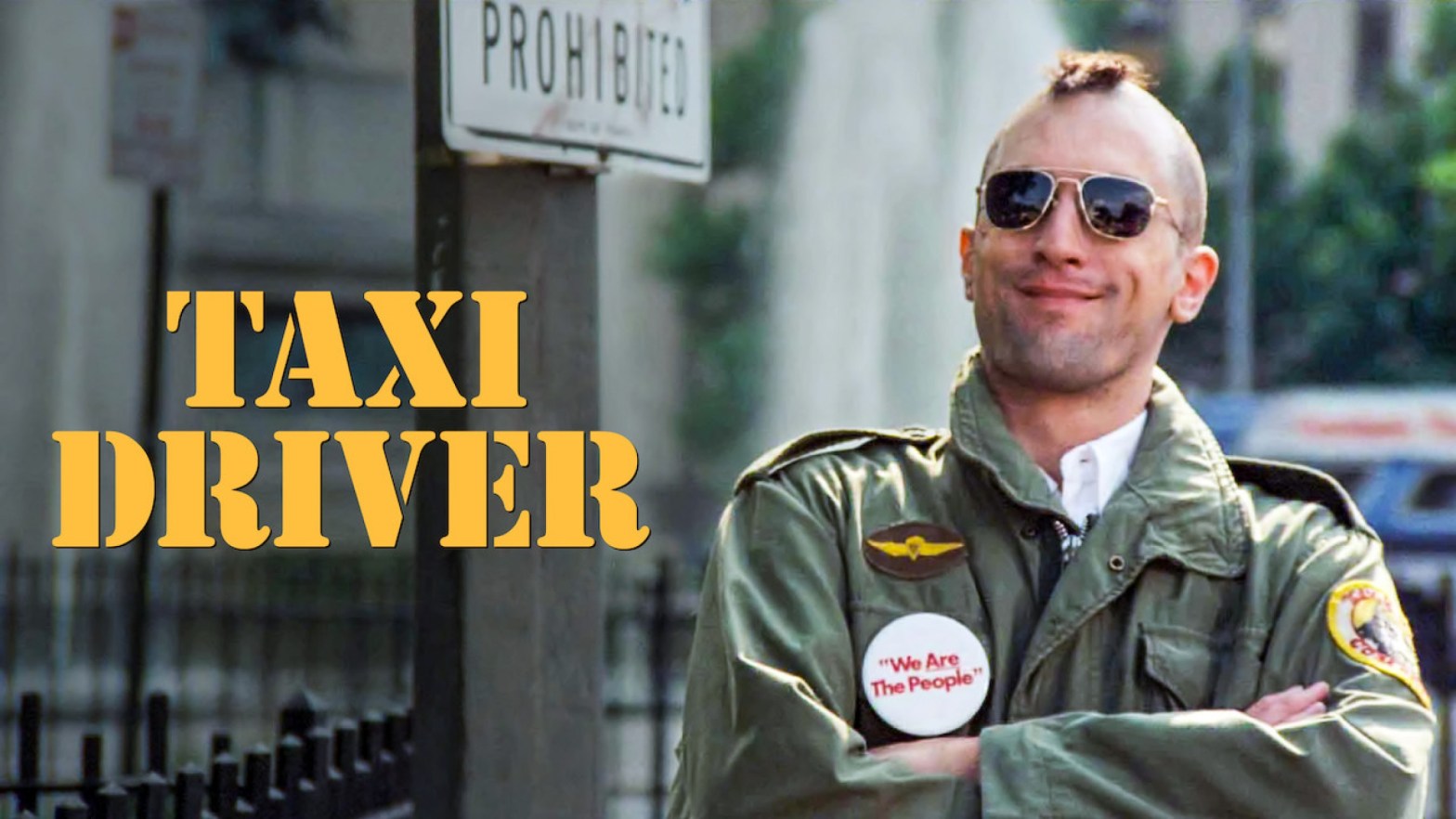
“Loneliness has followed me my whole life. Everywhere. In bars, in cars, sidewalks, stores, everywhere. There’s no escape. I’m God’s lonely man.”
Taxi Driver treats loneliness as a disease with which Travis Bickle is unmistakeably afflicted. It’s not a story of redemption; rather, it documents a steady spiral into alienation and instability which is at once discomfiting and intriguing.
It’s difficult to make a good film about a lonely person, as their solitude strips away the interactions that inform how they fit into the world. However, this supports the characterisation of Travis, as it reflects his detachment and inability to relate to those around him. Without other characters to bounce off, we don’t have a reference point for interpreting his behaviour nor any way of relating to other characters in the film. This situates us within the perspective of Travis himself, who is so socially disoriented that he takes his romantic interest, Betsy, to an explicit film during their second date. It is ironic that Travis’ main means of communicating with the audience is through his journal, a silent void where he speaks in aphorisms, almost as if attempting to counsel himself.

While Taxi Driver is more a character study than social commentary, it seems to attribute some responsibility for Travis’ despair to the society in which he lives. The phrase ‘we are the people’ is plastered throughout New York City in Taxi Driver as a slogan for the Palentine political campaign. In a printing error, ‘we’ has been underlined instead of ‘are’, suggesting a subtext that only the interests of certain groups are represented by community leaders and those outside the mainstream are necessarily ignored. This aspect of Taxi Driver clearly influenced Joker‘s bitter portrayal of a world that is indifferent to outsiders, whether they be stricken by mental illness, poverty or otherwise.
Travis Bickle isn’t a particularly endearing character and his anger is likely to repel audiences who might have otherwise sympathised with his isolation. However, I disagree with the rampant characterisation of Travis as a man who is afraid of his ‘imagined’ obsolescence. Travis’ obsolescence isn’t imagined; rather, he is pushed to the periphery of society due to his failure to fit within the norm. Each of his attempts to construct a normal life fail. Travis fails romantically with Betsy due to his misunderstanding of social mores and fails to make himself understood when confiding his crisis in Wizard, a fellow taxi driver. The world doesn’t have anything to offer Travis, and when he turns his gun on himself, it won’t even grant him the dignity of taking his own life.
Some people revile Travis Bickle as an early incarnation of an incel, citing his sexual frustration and social ineptitude as evidence. However, Travis’ saviour complex and compulsion to feed into his own rage is far more reminiscent of the social justice warriors of the modern world. Despite his disgust at New York City and the ‘scum’ that inhabit it, Travis is constantly drawn back to 42nd street, where he obsessively observes the criminality and prostitution that he claims to find so detestable. This reflects the modern compulsion to dig up inflammatory controversies in the media for the purpose of calling it out and causing outrage. Taxi Driver understands that we are fascinated by our own repulsions and, disgusted by this, seek to purge ourselves through aggressive censorship. Perhaps Travis Bickle would be pleased to see that his vision of a “real rain” cleansing the world has come to fruition, if not in the way he had anticipated. Instead of prostitutes being washed off the streets of New York, media platforms have been washed clean of triggering material.
Watching Taxi Driver is an uncomfortable experience. We are made to share in Travis’ experience of loneliness, rage and rejection, and by the end, we, like Travis, find his act of violence to be cathartic. In providing Travis with relief, it releases us from the relentlessness of his existence. I wouldn’t say that Taxi Driver is a film that everyone should watch and it’s certainly not a film that everyone would enjoy. However, it will resonate with those who struggle to find their place in society, especially in a world rife with extroverted ideals. For such people, Taxi Driver offers a sense of acknowledgment even while offering no solutions.
As Patrick Bateman once said:
“This is not an exit”
 View Kid