
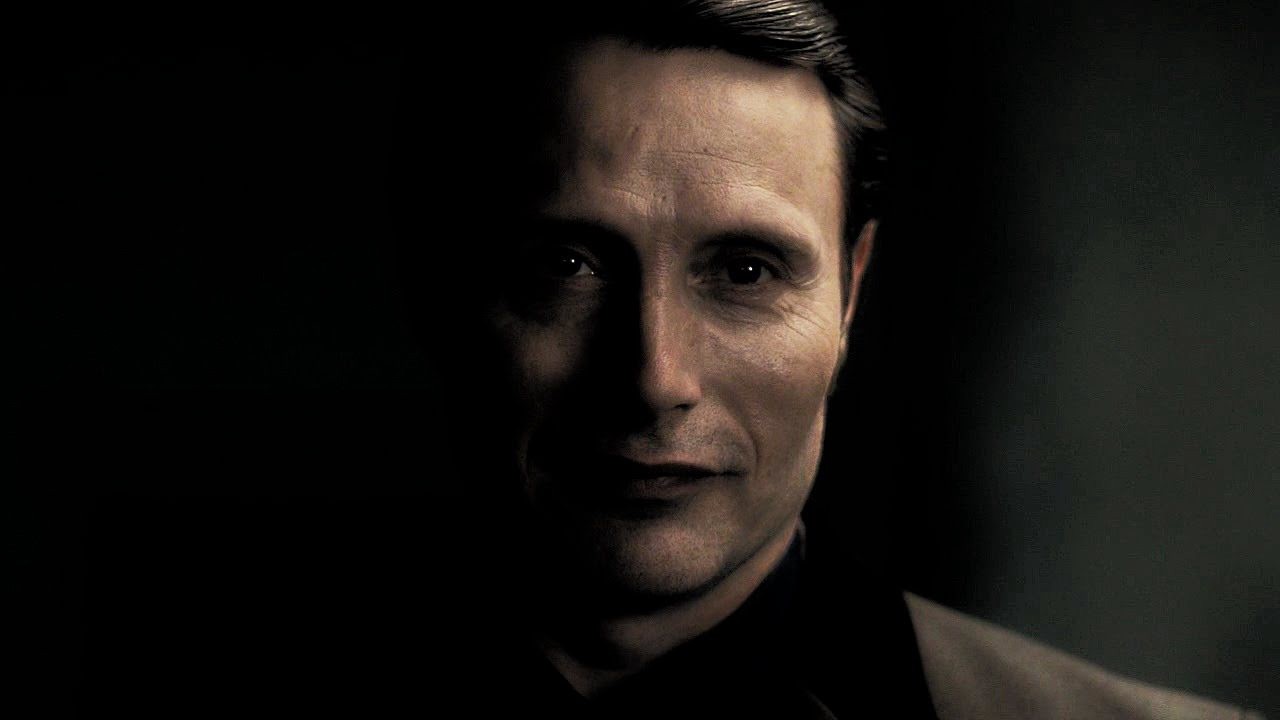
“What is the ape to man? A laughing stock or a painful embarrassment. And man shall be just that for the overman.”
Friedrich Nietzsche
The Ubermensch is an ethical ideal proposed by Friedrich Nietzsche and represents the type of life he believed could be justified as worth living in a fundamentally meaningless world. Nietzsche formulated this ideal to fill the void of purpose, meaning and values created by scientific atheism, which in its pursuit of truth led to the decline of religious devotion in Western society.
Nietzsche characterises the Ubermensch as an individual who exercises their independent will to define values separately from the conventions imposed by society. By liberating themselves from such herd-mindedness, the Ubermensch is able to transcend the base impulses of the human condition and achieve self-mastery. Due to the Nazi party’s misappropriation of the term to describe the Aryan race, the Ubermensch has come to be misunderstood in modern culture as referring to a type of biologically predetermined superiority based on racial prejudices, instead of an ideal to strive towards. To come to an understanding of the Ubermensch as intended by Nietzsche, it is useful to examine the concept in the context of modern fictional representations.

Representations of the Ubermensch in fiction do not align with the archetypal hero, as this would by definition require alignment with conventional values. Rather, the Ubermensch is often found among fictional antagonists, where they are at liberty to practice unconventional systems of morality.
Dr Hannibal Lecter is perhaps the most accurate depiction of an Ubermensch in modern fiction. Hannibal’s consumption of human flesh is a physical expression of his superiority and contempt for humanity, thereby reflecting the transcendent aspect of the Ubermensch. When queried about his eating habits, Hannibal states “it’s only cannibalism if we’re equals”. The perception of other humans as inferior reflects Nietzsche’s assertion that the man is to the Ubermensch what primates are to man.
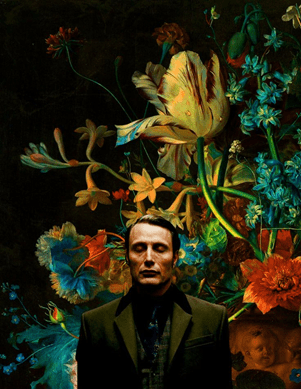
Hannibal’s self-mastery is evidenced by his extraordinary mental fitness and physical discipline. He possesses the mental fortitude to thrive during his incarceration in the Baltimore State Hospital, constructing a mind palace that affords him access to freedom and culture whilst under confinement. Hannibal has also attained a kind of cerebral enlightenment, which is demonstrated by his immense skill in analytical reasoning, synthesising information and astute intuition. Further, Hannibal’s capacity to withstand extreme pain is testament to his physical discipline. This level of self-mastery makes Hannibal his own god and – in his view – affords him the power to decide upon matters of life and death. As he says to Will Graham, “killing must feel good to God too. He does it all the time. And are we not created in his image?”
Hannibal’s self-mastery allows him to successfully assert his will upon others and alter their experience of the world. This reflects the ‘reality distortion field’ famously associated with Steve Jobs, which refers to Jobs’ use of charisma and manipulation to draw others into a subjective universe wherein his impossible expectations seemed reasonable and any ideas were co-opted as his own. Hannibal mirrors this behaviour in his manipulation of Will Graham’s psyche by means of subterfuge and suggestion. In an exercise of reality distortion more powerful than Jobs could have imagined, Hannibal transforms Will’s understanding of himself, ultimately causing him to question his own sanity and innocence.
The pursuit and appreciation of self-defined excellence is reflected in Hannibal’s admiration and practice of fine arts, culinary arts, literature, surgery and music. He is a renaissance man of class and taste, with exquisite attention to detail. Hannibal’s creativity is most fully realised in his murders, which are crafted to visually represent poetic justice in the context in which they were committed.

Hannibal rejects conventional societal values and has a particular disregard for banality. In fact, Hannibal views ignoble and base behaviour with such strong distaste that he often murders people on account of their rudeness. This nicely captures the ‘beyond good and evil’ concept posited by Nietzsche, who suggests that an Ubermensch’s judgment is not dictated by good and evil, but on the basis of whether something is species-improving or retrogressive.
Given that the greatest example of an Ubermensch is a serial killer, it is reasonable to question whether this concept’s function of elevating the individual over society and rejecting conventional values is inherently malignant. However, judging whether something is inherently good or evil requires engaging in moral objectivism, which is the antithesis of the Ubermensch ideal. Suffice it to say that an Ubermensch could hold values that are considered conventionally “good”; however, they would have adopted them independently, and likely for functional purposes.
The concept of the Ubermensch is useful in distinguishing antagonists who hold a great deal of individual power – true Ubermenschen – from those who are merely reactionary. Arthur Fleck (The Joker) and Travis Bickle (Taxi Driver) are examples of fictional antagonists whose deviance from the norm is imposed upon them. Both Fleck and Bickle adopt anarchic practices and values in response to having been ostracised from society against their will. Their lack of individual autonomy is the opposite of the Ubermensch ideal and instead reflects the slave morality postulated by Nietzsche. Allowing one’s system of morality/thought to be defined in opposition to the norm is equally as herd-minded as conforming.

The Ubermensch should also be distinguished from the nihilist, who deviates from the norm due to a desperately cynical world-view in which nothing is perceived to have meaning. As a result, the nihilist does not value humanity or themselves – they reject objective meanings imposed by society, similar to the Ubermensch; however, they do not replace it with something of their own. The Ubermensch is more of an existentialist, transforming the world around them into something meaningful through their strength of will.
When properly comprehended, Nietzsche’s Ubermensch ideal celebrates freedom and non-conformity. In encouraging moral pluralism and self expression, it inoculates the individual against the urgings of tribalism and partisanship that are endemic to modern society. The path of the Ubermensch is nonetheless a difficult one to tread, entailing disapproval from conventional society; however, as Nietzsche says, “the noble type of man feels himself to be the determiner of values, he does not need to be approved of, he judges ‘what harms me is harmful in itself’.”
 View Kid