

The absence of new material on View Kid during the past ten months coincided with a resolution to produce a greater volume of less substantive film reviews. The purpose of this endeavour was to limber up my writing skills and diminish perfectionist tendencies.
The film-oriented social networking website – Letterboxd – proved to be the ideal forum for short-form reviews. As the Letterboxd project is now complete, it seems appropriate to collect a selection of those reviews here as I resume work on the View Kid blog.
Whisper of the Heart
Star Rating: 3/5
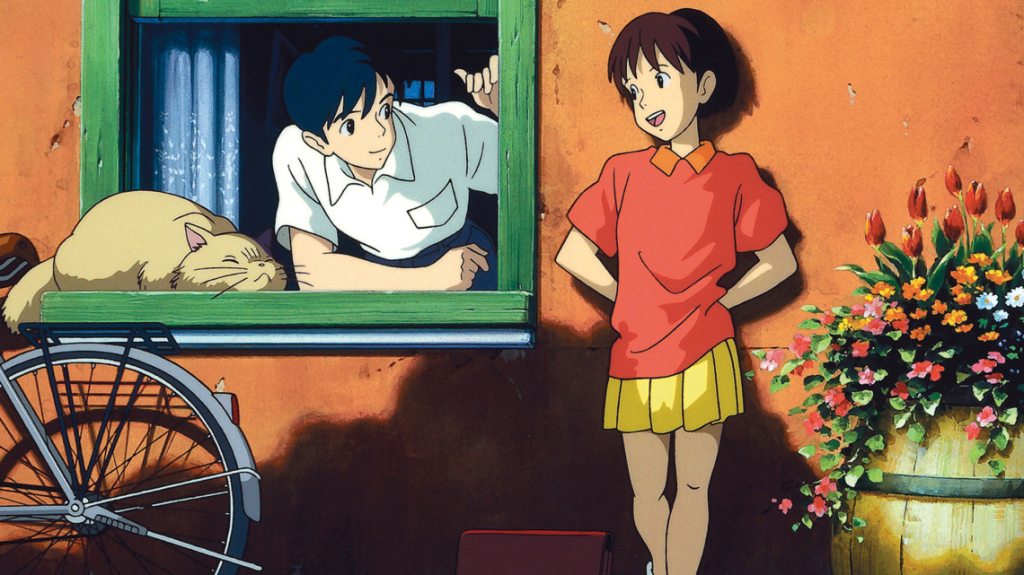
Whisper of the Heart follows Shizuku Takahashi on a journey to embrace her creative ambitions. What begins as a story about a secret admirer in the style of You’ve Got Mail, swiftly becomes a more powerful narrative when the romance incites Shizuku to pursue her love of writing. The film acknowledges the practical challenges of the creative urge by situating Shizuku within a family of pragmatists as she is commencing her high-school entrance exams, whereupon her success and future prospects are measured against criteria that are not authentic to her nature.
Perhaps more poignant is the film’s depiction of the emotional challenges of being an artist. Shizuku identifies the scepticism that threatens the creative instinct as one ages, when she says:
Why do we change, I wonder? […] Reading books, too…I don’t get excited like I used to. Right away, you know, something inside says “it’s not likely things would work out this well”
Thus, Shizuku’s choice to believe that things could work out well – that she could succeed in writing a novel of her own – is a radical act of faith and self-acceptance. Even after this choice is made, Whisper of the Heart remains grounded in emotional truth as Shizuku struggles with the often exasperating and isolating creative process, and the vulnerability of sharing her art with others.
John Denver’s ‘Take Me Home Country Roads’ is repeated throughout the soundtrack of Whisper of the Heart. Taken out of its geographical context, the song expresses a yearning to return to one’s authentic self and reclaim the idealism of youth. Both Shizuku and her romantic interest – Seiji Amasawa – make this desire manifest by the film’s conclusion and demonstrate the courage it takes to pursue an unconventional path in life.
Magic Mike XXL
Star Rating: 3/5
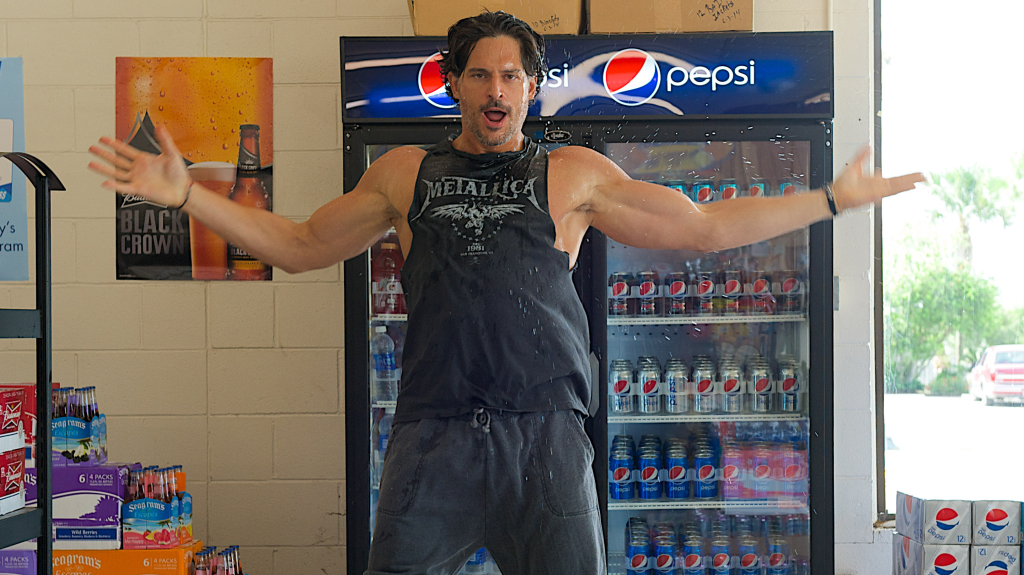
Magic Mike XXL takes place in an alternate universe where female self-worth rests solely upon the loins of men, their desirability premised upon overt expressions of lust by male entertainers. The Res-Erection squad accepts this responsibility with grace and dignity, deigning to grind upon even the most marginalised groups of women until they are sufficiently validated by the male gaze.
Deeply flawed gender dynamics aside, MMXXL offers a compelling commentary on creative expression and individualism. The male entertainers’ road trip to the Myrtle Beach Stripping Convention parallels an emotional journey to reclaim their identities following years of oppression under the autocratic regime of Dallas, the owner of the Xquisite Strip Club who abandoned his dancers after the events of the 2012 film.
There is a deep ennui at the heart of MMXXL, which is premised on the limited future prospects of the aging male entertainers and their lack of marketable skills once they can no longer perform. This matter is left unresolved at the film’s conclusion, imbuing DJ Khaled’s ‘All I do is Win’ with a dark satire as it plays over the final sequence, signifying the men’s ignorance of the bleak future that will soon sweep in to obfuscate them all.
Barb & Star Go to Vista Del Mar
Star Rating: 3.5/5

Barb and Star successfully navigates the dicey waters of surrealist comedy to deliver a delightfully camp narrative of middle-age trivialities. The film leans in to absurdity with a determination akin to that of Wayne’s World and the Rocky Horror Picture Show, and pulls it off with a wry self-awareness that juxtaposes the utter naivety of its protagonists.
Perhaps the greatest accomplishment of Barb and Star is affording Jamie Dornan the opportunity to take a comedic turn as Edgar Paget, a misty-eyed ingenue who yearns to be part of an ‘official couple’. His trademark earnestness that has proven cloying in previous films, is hammed up in Barb and Star to great effect.
‘Edgar’s Prayer’ is a comedic masterpiece that will remain in the cultural consciousness for years to come. If this were the sole legacy of Barb and Star, it should be considered a grand success.
They Live
Star Rating: 5/5

They Live is Introduction to Sociology for chads. Rowdy Roddy Piper plays Nada, a similarly rowdy individual whose progression from misty eyed ingenue who ‘believes in America’ to radical extremist intent on overthrowing the elite is awe-inspiring in its speed and certainty.
The film posits the utility of wrestling in addressing institutionalised disadvantage, as Nada deconstructs the capitalist agenda and destroys the human power elite one clothesline at a time. Wrestling is a powerful theme throughout They Live, which includes the greatest (and longest?) extreme rules back-alley wrestling interlude of all time. All great fights have a purpose; in this case, Nada seeks to force a pair of sunglasses onto an unwilling recipient, thus giving rise to the unlikely threat “either put on the glasses, or start eating that trashcan”.
I shall never forget Nada’s touching last words; a hateful “fuck you” uttered as he shoots a woman in the face, destroys the source of the false consciousness and flips off an alien police officer before falling into his final slumber.
Black Christmas
Star Rating: 3.5/5
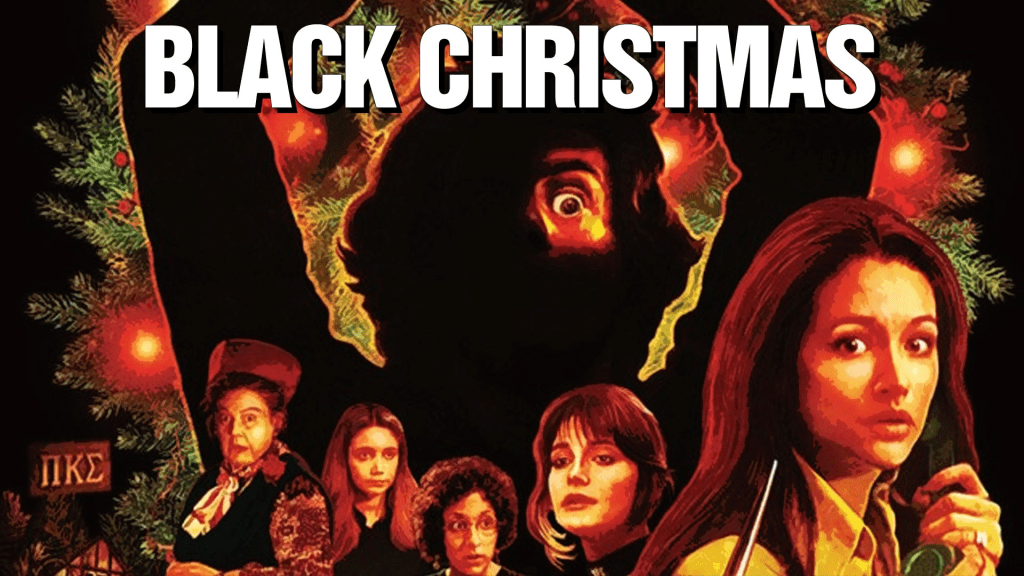
Jess responded to “I love you” with “I know” 6 years before Han Solo uttered the very same emotionally repressed phrase in Empire Strikes Back. In Jess’ case, she was speaking to Peter – the boy who cried ‘piano recital’ in the face of a proposed abortion – and thus it was merited.
Black Christmas postulates that if you behave like a psychopath, you will be treated as one. Had Peter restrained himself from rage-smashing his piano and lurking angrily in the woods outside his girlfriend’s house, he may still be alive, or at least could have avoided being posthumously convicted of mass murder.
Friday the 13th: The Final Chapter
Star Rating: 4/5
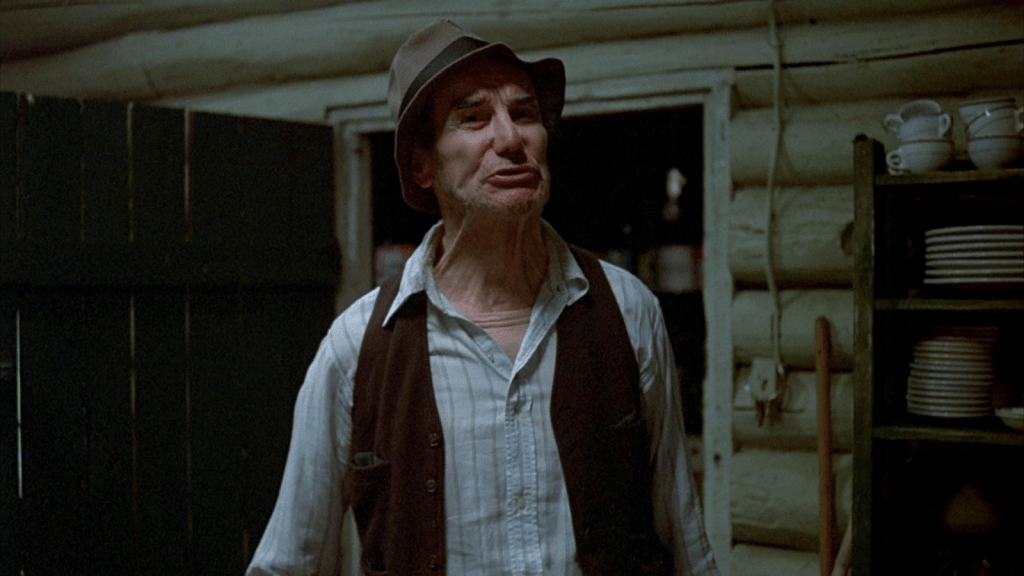
Friday the Thirteenth: The Final Chapter uses the series’ well-established formula and assured viewership as a foundation for narrative and cinematographic creativity. Notably, it introduces a Final Boy – twelve-year-old Tommy – who serves as a dual protagonist and rare survivor of the sorting algorithm of mortality. Tommy is an ideal vehicle of identification for an audience comprised primarily of adolescent boys who share in his passion for the grotesque and unbridled joy in the face of nudity. His triumph over Jason at the film’s conclusion is a shared triumph, made more satisfying on account of its parallels with Part II’s use of psychological manipulation to defeat the monster.
This is not to say that The Final Chapter is more sophisticated than it’s predecessors, only that it reflects a greater understanding of how to entertain and please its audience. The Final Chapter remains as delightfully camp as earlier instalments, evidenced by Crispin Glover’s manic dancing and Rob’s articulate death cry of “Oh my god! He’s killing me! He’s killing me!”
 View Kid