“It’s hard to see you as desirable” my partner said, unwittingly – or perhaps just unfortunately – confirming the longstanding fear that I may not be wanted by someone I love, and feeding the fervor of the eating disorder I developed during my adolescence to keep those thoughts at bay.
These words transported me to the young girl I once was. The girl that I had – at the encouragement of my peers – learned to hate and grown committed to erasing forever. I was such a big and awkward girl – antithetical to all conventional measures of attractiveness – that there was no hiding from my undesireability, and I was reminded of that in every moment that I existed in proximity to others.
I initially sought to resolve the problem by isolating myself ; however, this was unsustainable and I instead sought to make myself small, imperceptible. Disordered eating was the solution I devised at that time, and remains a habitual mechanism of responding to all forms to discomfort, anxiety, and insecurity to this very day.
In recent years, I have characterised myself as “recovered”, gesturing to features such as regular and sufficient meals, and an absence of overt purging behaviours as evidencing the legitimacy of this claim. It was not until I was recently situated within the perspective of that young girl again, that I realised I still hated her – and this hate kept me perpetually attached to the eating disorder.
It would appear – based on my partner’s comment – that despite every effort and intervention I have applied to myself, the feared rejection could still be realised. That I could exercise five days a week, have a pretty face, toned body, and accommodating personality, and still be fundamentally unwanted. That all the supposedly ideal traits fostered through the eating disorder were ineffectual in preventing this most undesired outcome.
As a woman who is now in the precise same position as the girl, I can now readily appreciate that she did nothing to deserve hate.
Perhaps this relationship has been an opportunity to explore the manner of relating I developed through my childhood, and come to find a way of healing the wounds of the past with the valued perspective and resources of adulthood.
Or maybe tomorrow, I’ll wake up with a renewed intention to lose another five kilos in a misguided attempt to secure the affections of my beloved. It wouldn’t be the first time I have been led astray.
Yet I feel today’s realisation marks a more fundamental shift in perspective. Something I can hold onto. An incontravertible piece of evidence that the eating disorder is not effective.
When I discovered that I was pregnant, my immediate concern was how I could stop being pregnant as soon as possible. I had consistently denounced the prospect of motherhood – or at least of myself as mother – since I was a child. As a twenty-six-year-old student who had recently broken up with and tentatively resumed ongoing relations with a currently overseas boyfriend, I was not in a comfortable position to change my perspective on the matter.
Despite their awareness of my position, my close friends and family each reacted with an assumed certainty of my emotional turmoil produced by the supposedly life-altering and heartbreaking decision regarding whether to progress with or terminate the pregnancy. The mere implication that decision-making was required was alien to me. The decision had been made long ago and reiterated on numerous occasions. At the prompting of friends, I nonetheless examined the possibilities associated with each course of action so that I could make an ethically informed and autonomous decision.
Terminating the pregnancy was not life-altering, it was life-affirming – an expression of my commitment to the path that I am already treading. Following an extended period of feeling adrift and directionless in the wake of a major relocation, contemplating the disruption of a pregnancy carried to term enabled me to recognise the roots I have developed and aspirations I have fostered within this new life.
Were I a mother in one year from now, I would be sacrificing the continuity of my social work studies, my capacity to work, my freedom to pursue my hobbies and interests without regard for a dependent human life for whom I would be responsible. To reject pregnancy was to accept myself, though I acknowledge the opposite may be true for others.
I sought medical advice and was again met with the narrative of ‘a difficult decision’. Though I was equipped with determination for termination, I was plagued by others’ insistence that this was supposed to be an emotional event associated with loss, regret, and despair. It gave me the opportunity to realise the value of a professional who listens to the person they are supporting before assuming their experience, a practice that is often cited in my social work studies.
I took the medication that would cause my uterus to contract and expel the pregnancy tissue, and waited to feel horrified by the process that would ensue. I cramped, I went to the bathroom, I observed bloody clots leave my body, and I felt relief. Following two weeks of nausea and fatigue, then days of anticipation of the pain that may be associated with termination, I was empty and okay.
I don’t know if I’m empty in a more profound sense, in that I didn’t experience any significant emotional distress when ending the potential life that I had harboured for seven weeks. I don’t know if the ease with which I progressed through this supposedly harrowing process speaks to an absence of the makeup that should comprise the human character. As is my wont, I quietly transgressed the social norm with a written confession the only evidence of my deviation.
The Suicide Squad is concerned with a group of misfit anti-heroes who are temporarily released from prison to perform the bidding of the military industrial complex, with the likelihood of their demise rationalised by the state’s devaluation of the lives of convicted criminals. Under James Gunn’s direction, the film unites the playfulness of the Marvel Cinematic Universe (MCU) with the grit and artistic agency that is afforded to creators within the DC Extended Universe (DCEU). It is bold in its depiction of graphic themes and complex characters, which enables the film to transcend the conventions of the superhero genre that have grown tiresome and predictable within the repetitious hands of the MCU. This serves to rehabilitate the Suicide Squad property that was critically unsuccessful in its 2016 iteration and indicates an upward trajectory for the entire DCEU should it continue to take risks and exercise its artistic advantage over the MCU. The Suicide Squad therefore represents a vestige of hope for the continuation of true cinema that successfully reflects the vision of an individual artist.
The Suicide Squad differentiates itself from mainstream superhero films by depicting its characters as complex and morally ambiguous rather than recycling the innocuous and inoffensive archetypes that are typical of the genre, thereby affording its characters a degree of emotional authenticity that is absent from most superhero films. Ratcatcher II’s ability to communicate with rodents is imbued with emotional saliency by positioning this as a skill learned from her father as a means of surviving an impoverished childhood on the streets of Prague. While cognisant of the ruination caused by his heroin addiction, her father recognises the value in the most meagre of existences when he reflects that ‘rats are the lowliest and most despised of all creatures… if they have purpose, so do we all.’ This tragicomic revelation renders the rat a symbol of hope for the underdog and exhibits Gunn’s affinity for the outsider, particularly his capacity to render their outlandish traits with humanity and depth. Whilst the recent cohort of superhero franchise films appeal to broad audiences by presenting stock characters with blandly utilitarian motives, The Suicide Squad demonstrates greater artistic integrity by risking exploration of the human condition and its accompanying flaws and contradictions.
The Suicide Squad’sfoundation of emotional authenticity allows the film to operate beyond the constraints of logical plausibility. Absurdity is rife within the film, though reaches its nexus in the depiction of a giant intergalactic starfish – Starro- that is brought to earth and held captive by the United States Military for the purpose of experimentation and weaponisation. Though this Nuremberg-esque narrative is a trope within the superhero genre, surrounding Starro with human drama and characters that are believably acting in alignment with their individual motives ensures the willing suspension of disbelief is maintained in spite of its inherent absurdity.
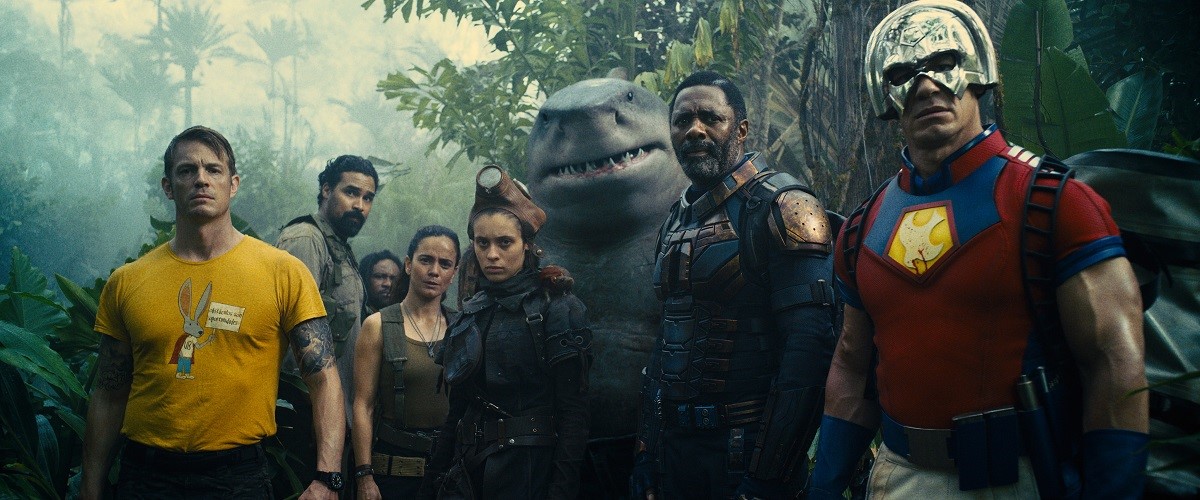
In film, each shot contains a vast amount of expressive audio-visual information that is conveyed instantaneously, such that its various meanings are able to bypass the conscious awareness of its audience[1]. James Gunn effectively draws upon visual language in The Suicide Squad to distinguish his characters as authentic and varied, with personal aesthetics evoking a wide range of filmic genres, styles and traditions. The black carapace of Bloodsport’s armour is paired with a Predator-esque helmet, thereby establishing him within the gritty post-futurism of films such as Bladerunner and Christopher Nolan’s Batman. Conversely, Peacemaker is costumed in the camp style of 1970s comics and wears a chrome helmet that is so impractical as to defy reason. These aesthetic decisions establish the characters as foils, defined primarily in terms of their opposing logics and world-views. The significance of aesthetic technique is also evident in Gunn’s depiction of Rick Flag, whose army uniform in 2016’s Suicide Squad attracted derision as a visual allegory for his conservativism in contrast with his more deviant, leather-clad peers. Costuming Flag in a yellow t-shirt emblazoned with a cartoon rabbit in the 2021 film signifies the character’s newfound insouciance, and speaks to Gunn’s The Suicide Squad representing a less self-serious entry into the genre.
While The Suicide Squad is unique in many respects, it is conventional in exhibiting the politically left ideology that is commonplace within the superhero genre. In The Sky is Falling (2018), Peter Biskind identifies the following characteristics that are apparent in films with an underlying leftist ideology:
Portrayal of authority, the military and/or the government as brutal and stupid;
The ‘other’ is viewed with sympathy;
Differences are valued;
Society requires saving from itself; and
The therapeutic model of social control is promoted above coercive control.[2]
In The Suicide Squad, Starro enjoys the status of sympathetic ‘other’ in spite of his explicit monstrousness. Though he destroys the city of Corto Maltese and takes innumerable human hosts by disseminating face-hugging parasites that reduce their victims to empty husks with faces of bloody mulch, Starro departs the narrative with the statement ‘I was happy, floating, staring at the stars’. This implicates the United States Government as the ultimate transgressor for disrupting the course of nature and encourages audience alignment with Starro. Biskind suggests this is typical of the ‘luddite left’ perspective, which promotes the sanctity of nature above culture, particularly condemning the exploitation of nature in service of corporate greed. The Government’s attempted intervention in the Corto Maltese conflicts is framed as imperialist paternalism that is ultimately harmful due to their fundamental ignorance of the culture. The brutality of the United States’ disregard for Corto Maltese is made manifest when their figurehead – Amanda Waller – instructs the Suicide Squad to abandon the nation to Starro’s wrath, prioritising the government’s reputation above the public interest. The internal revolt initiated by the government’s staff is depicted as a necessary means of addressing institutional incompetence and oppression, thereby firmly establishing the leftist ideals of The Suicide Squad through the narrative mechanism of a Marxist revolution.
While the leftist ideology of the MCU and DCEU indicts societal institutions and corporations for their self-interest, these films are ironically produced by the most financially-driven corporations in the modern world, being Warner Brothers and the Walt Disney Company. Martin Scorsese characterises these superhero texts as products rather than cinema, noting that ‘their contents are market-researched, audience sanctioned, vetted and modified until they are ready for consumption’[3]. The mass consumption of such films is driven by rendering characters as broad archetypes that speak to brand as opposed to identity, and narratives that are action-driven and centred around conventional, non-threatening themes that transcend cultural boundaries to amass international and intergenerational appeal. The box office success, licencing agreements with distributors and merchandise profits generated by this widespread appeal serves the financial interests of production companies, thereby perpetuating a formulaic approach to film-making that prioritises consumption above quality or artistic vision.
The profitability of formulaic film production by elite corporations is evident upon analysing the twenty highest-grossing films of all time, which reveals that 85% are franchise films and 65% are produced and distributed by Walt Disney Studios. [4] In particular, Avengers: Endgame’s (2019) position as the second highest grossing film of all time epitomises the profitability of the formulaic approach. As the twenty-second film in the MCU, Endgame represents the apex of franchise sequels with its appeal primarily deriving from the audience’s pre-existing investment in the narrative daisy-chains established by its progenitors. Whilst 15% of the highest grossing films is comprised of original features, these films fall within a homogenous group of production companies that are over-represented throughout the top performers. In circumstances where profit and success are concentrated amongst a minority of elite production companies that produce highly formulaic content, there are few extrinsic incentives for the pursuit of creative expression and cinematic risk.
Titanic – Paramount Pictures & 20th Century Fox Avatar – 20th Century Fox Frozen – Walt Disney Studios
Table 1 – Film Franchises Comprising the Top 20 Highest Grossing Films
The critical discourse in relation to the highest grossing films suggests that financial success is not a measure of quality; however, the locales of financial success have and will continue to influence the direction of the film industry. Scorsese proposes this will lead to a ‘steady elimination of risk’ in cinema and the marginalisation of independent film and original features in favour of franchise dominance, noting that franchise films are more appropriately characterised as ‘worldwide audio-visual entertainment’ as opposed to true cinema. Conversely, true cinema is characterised by:
Genuine risk;
The film reflects the vision of an individual artist;
The audience is exposed to something unexpected/new to their experience;
The complexity of the human condition, in its contradictions, is explored.
Whilst these features are evident in The Suicide Squad, the risk and creative expression reflected therein is increasingly anomalic in the modern film industry and reflects broader social trends away from art that exhibits complexity toward art-substitutes that are motivated by external incentives. The purpose of art is perspective. Art situates us within others perspectives to enable imaginative access to other selves, and is a mechanism for the artist to express their individual vision. Art substitutes such as worldwide audio-visual entertainment are capable of inciting pleasure and gratification; however, they cannot replicate the human subjectivity that constitutes art. The Suicide Squad is an unlikely forebear of artistic integrity and it remains to be determined whether it establishes an ongoing precedent for work that contains risk and merit within the DCEU and cinema more broadly.
[1] Sikov, E. 2020. Film Studies: An Introduction. 2nd Ed. Columbia University Press, New York.
[2] Biskind, P. 2018. ‘The Sky is Falling: How Vampires, Zombies, Androids and Superheroes Made America Great for Extremism’. New Press, New York.
[5] While Marvel and Star Wars films are produced by Marvel Studios and Lucasfilm Ltd respectively, these are merely subsidiaries of Walt Disney Studios and have been noted as such in table 1.
The absence of new material on View Kid during the past ten months coincided with a resolution to produce a greater volume of less substantive film reviews. The purpose of this endeavour was to limber up my writing skills and diminish perfectionist tendencies.
The film-oriented social networking website – Letterboxd – proved to be the ideal forum for short-form reviews. As the Letterboxd project is now complete, it seems appropriate to collect a selection of those reviews here as I resume work on the View Kid blog.
Whisper of the Heart
Star Rating: 3/5
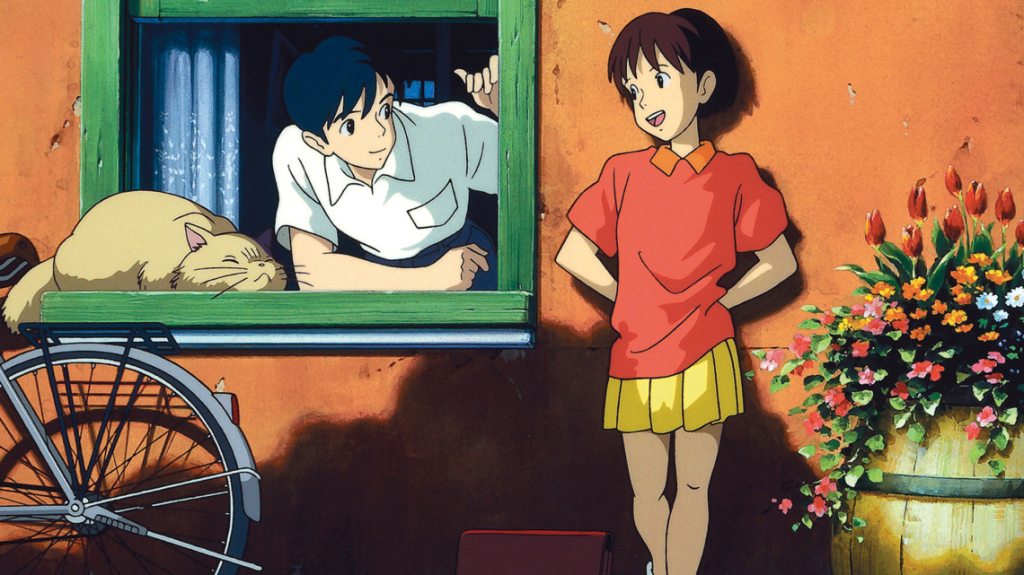
Whisper of the Heart follows Shizuku Takahashi on a journey to embrace her creative ambitions. What begins as a story about a secret admirer in the style of You’ve Got Mail, swiftly becomes a more powerful narrative when the romance incites Shizuku to pursue her love of writing. The film acknowledges the practical challenges of the creative urge by situating Shizuku within a family of pragmatists as she is commencing her high-school entrance exams, whereupon her success and future prospects are measured against criteria that are not authentic to her nature.
Perhaps more poignant is the film’s depiction of the emotional challenges of being an artist. Shizuku identifies the scepticism that threatens the creative instinct as one ages, when she says:
Why do we change, I wonder? […] Reading books, too…I don’t get excited like I used to. Right away, you know, something inside says “it’s not likely things would work out this well”
Thus, Shizuku’s choice to believe that things could work out well – that she could succeed in writing a novel of her own – is a radical act of faith and self-acceptance. Even after this choice is made, Whisper of the Heart remains grounded in emotional truth as Shizuku struggles with the often exasperating and isolating creative process, and the vulnerability of sharing her art with others.
John Denver’s ‘Take Me Home Country Roads’ is repeated throughout the soundtrack of Whisper of the Heart. Taken out of its geographical context, the song expresses a yearning to return to one’s authentic self and reclaim the idealism of youth. Both Shizuku and her romantic interest – Seiji Amasawa – make this desire manifest by the film’s conclusion and demonstrate the courage it takes to pursue an unconventional path in life.
Magic Mike XXL
Star Rating: 3/5
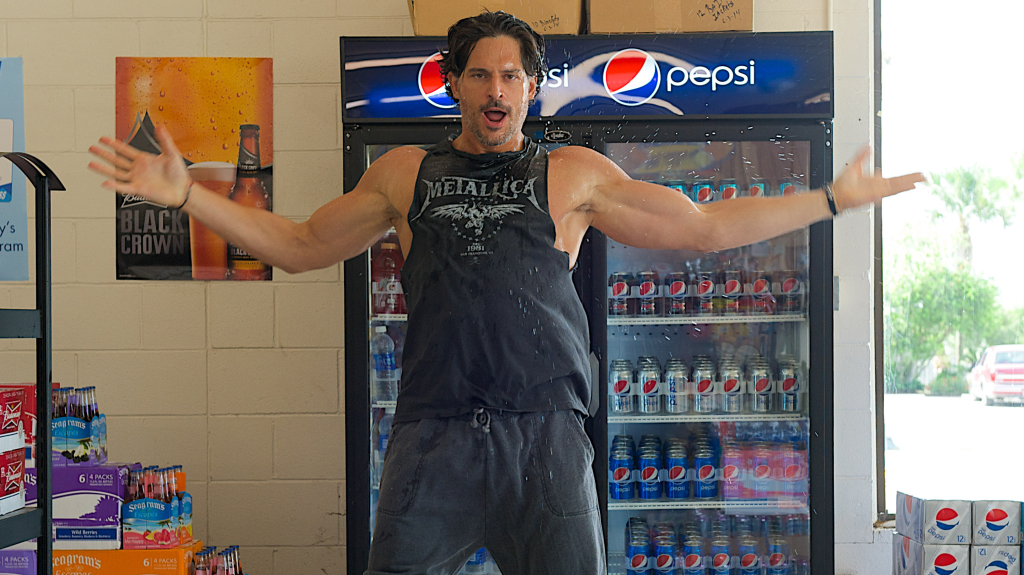
Magic Mike XXL takes place in an alternate universe where female self-worth rests solely upon the loins of men, their desirability premised upon overt expressions of lust by male entertainers. The Res-Erection squad accepts this responsibility with grace and dignity, deigning to grind upon even the most marginalised groups of women until they are sufficiently validated by the male gaze.
Deeply flawed gender dynamics aside, MMXXL offers a compelling commentary on creative expression and individualism. The male entertainers’ road trip to the Myrtle Beach Stripping Convention parallels an emotional journey to reclaim their identities following years of oppression under the autocratic regime of Dallas, the owner of the Xquisite Strip Club who abandoned his dancers after the events of the 2012 film.
There is a deep ennui at the heart of MMXXL, which is premised on the limited future prospects of the aging male entertainers and their lack of marketable skills once they can no longer perform. This matter is left unresolved at the film’s conclusion, imbuing DJ Khaled’s ‘All I do is Win’ with a dark satire as it plays over the final sequence, signifying the men’s ignorance of the bleak future that will soon sweep in to obfuscate them all.
Barb & Star Go to Vista Del Mar
Star Rating: 3.5/5
Barb and Star successfully navigates the dicey waters of surrealist comedy to deliver a delightfully camp narrative of middle-age trivialities. The film leans in to absurdity with a determination akin to that of Wayne’s World and the Rocky Horror Picture Show, and pulls it off with a wry self-awareness that juxtaposes the utter naivety of its protagonists.
Perhaps the greatest accomplishment of Barb and Star is affording Jamie Dornan the opportunity to take a comedic turn as Edgar Paget, a misty-eyed ingenue who yearns to be part of an ‘official couple’. His trademark earnestness that has proven cloying in previous films, is hammed up in Barb and Star to great effect.
‘Edgar’s Prayer’ is a comedic masterpiece that will remain in the cultural consciousness for years to come. If this were the sole legacy of Barb and Star, it should be considered a grand success.
They Live
Star Rating: 5/5
They Live is Introduction to Sociology for chads. Rowdy Roddy Piper plays Nada, a similarly rowdy individual whose progression from misty eyed ingenue who ‘believes in America’ to radical extremist intent on overthrowing the elite is awe-inspiring in its speed and certainty.
The film posits the utility of wrestling in addressing institutionalised disadvantage, as Nada deconstructs the capitalist agenda and destroys the human power elite one clothesline at a time. Wrestling is a powerful theme throughout They Live, which includes the greatest (and longest?) extreme rules back-alley wrestling interlude of all time. All great fights have a purpose; in this case, Nada seeks to force a pair of sunglasses onto an unwilling recipient, thus giving rise to the unlikely threat “either put on the glasses, or start eating that trashcan”.
I shall never forget Nada’s touching last words; a hateful “fuck you” uttered as he shoots a woman in the face, destroys the source of the false consciousness and flips off an alien police officer before falling into his final slumber.
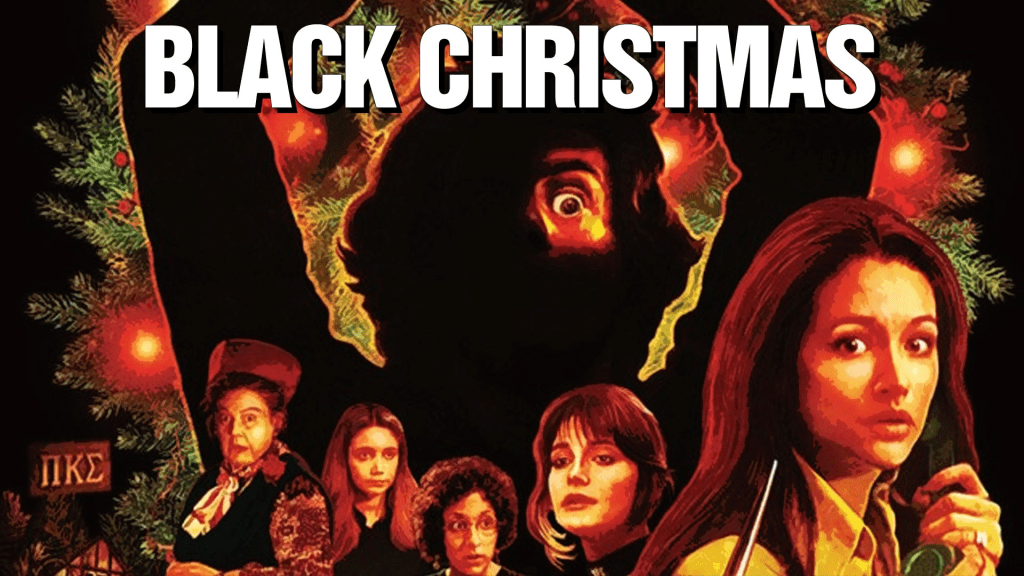
Black Christmas
Star Rating: 3.5/5
Jess responded to “I love you” with “I know” 6 years before Han Solo uttered the very same emotionally repressed phrase in Empire Strikes Back. In Jess’ case, she was speaking to Peter – the boy who cried ‘piano recital’ in the face of a proposed abortion – and thus it was merited.
Black Christmas postulates that if you behave like a psychopath, you will be treated as one. Had Peter restrained himself from rage-smashing his piano and lurking angrily in the woods outside his girlfriend’s house, he may still be alive, or at least could have avoided being posthumously convicted of mass murder.
Friday the 13th: The Final Chapter
Star Rating: 4/5
Friday the Thirteenth: The Final Chapter uses the series’ well-established formula and assured viewership as a foundation for narrative and cinematographic creativity. Notably, it introduces a Final Boy – twelve-year-old Tommy – who serves as a dual protagonist and rare survivor of the sorting algorithm of mortality. Tommy is an ideal vehicle of identification for an audience comprised primarily of adolescent boys who share in his passion for the grotesque and unbridled joy in the face of nudity. His triumph over Jason at the film’s conclusion is a shared triumph, made more satisfying on account of its parallels with Part II’s use of psychological manipulation to defeat the monster.
This is not to say that The Final Chapter is more sophisticated than it’s predecessors, only that it reflects a greater understanding of how to entertain and please its audience. The Final Chapter remains as delightfully camp as earlier instalments, evidenced by Crispin Glover’s manic dancing and Rob’s articulate death cry of “Oh my god! He’s killing me! He’s killing me!”
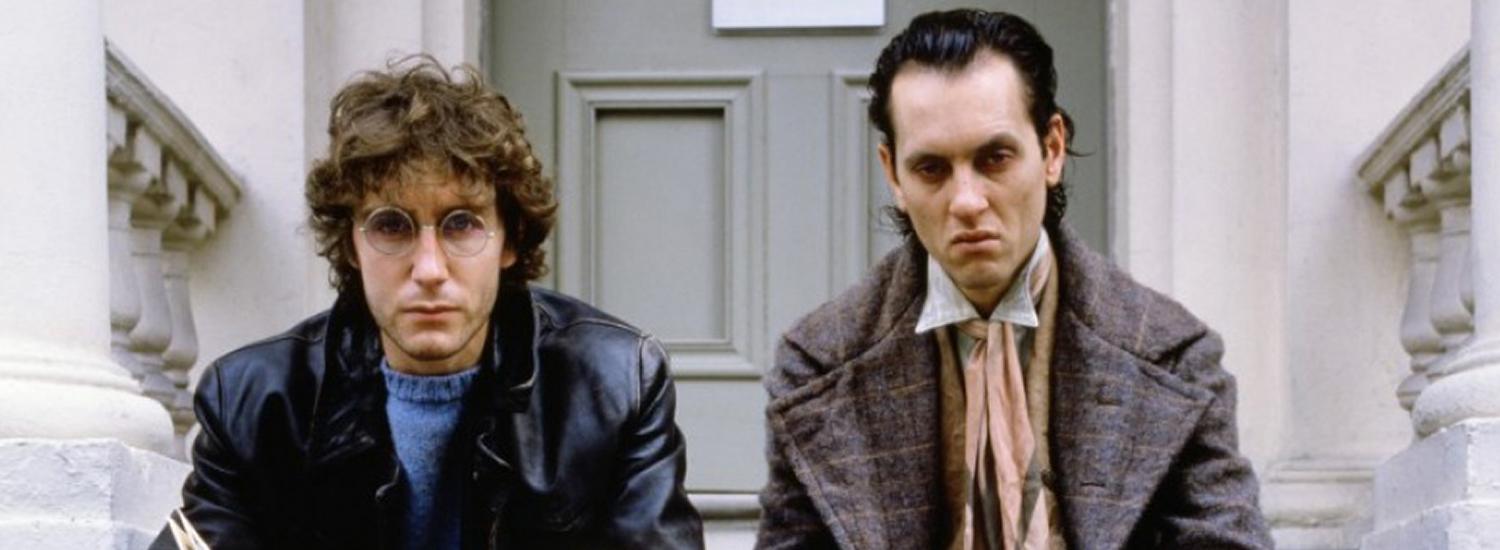
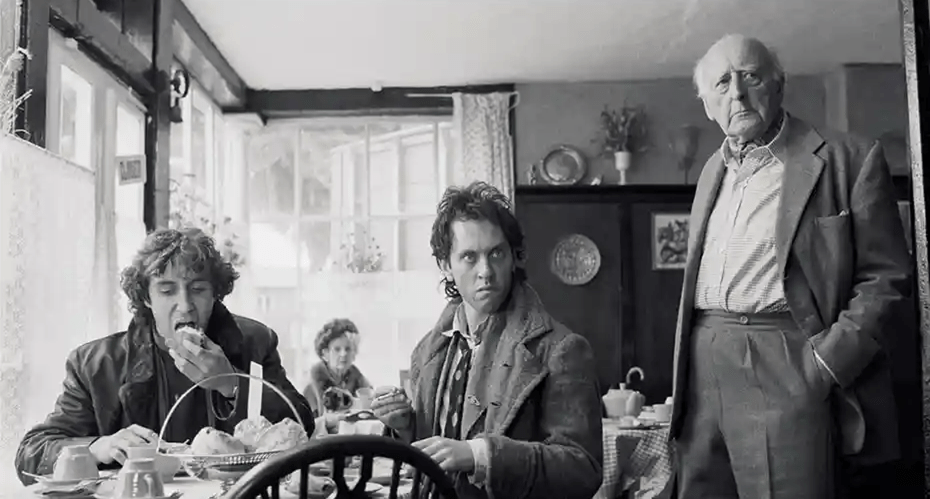
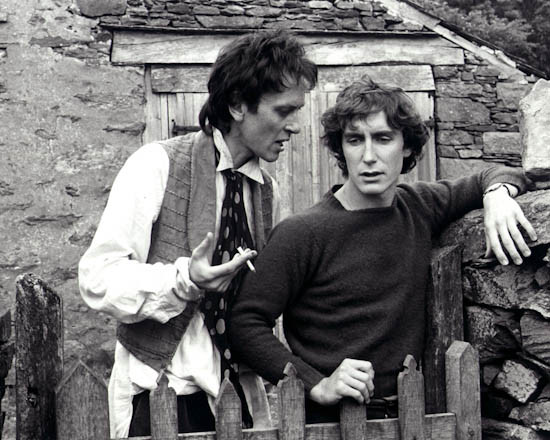
Withnail and I is a comedic horror about the recognition of one’s own depravity and its consequences. The narrative centres upon Withnail and Marwood (the titular ‘I’), a pair of impoverished creatives astounded by the indignity of their own circumstances, though doing nothing to improve upon them. Indeed, they live in a less dignified manner than their penury dictates due to their prolific substance-use and indolence. The audience is introduced to their shared London apartment through the abhorring, red-rimmed eyes of Marwood, where they are overwhelmed by a filth that has attained its own organic autonomy. Aware that they are ‘[…] drifting into the arena of the unwell [and] making an enemy of [their] own future’, the pair endeavour on a trip to the country in search of rejuvenation; however, the grotesquery proves inescapable and they are instead subject to a litany of vulgar events against a landscape rich in awfulness.
While the plot of Withnail lends itself to a typical narrative of drunken exploits, it transcends stereotype due to the curious poeticism of the derelicts it portrays. Their command of language and intertextual references denote an educated, Byronic, sensibility that renders the characters’ ruin more deeply felt by its stark juxtaposition. This is evident in Withnail’s recitation of the soliloquy What a Piece of Work is Man at the film’s conclusion:
‘I have of late, but wherefore I know not, lost all my mirth and indeed it goes so heavily with my disposition that this goodly frame the earth seems to me a sterile promontory’
This soliloquy – excerpted from Hamlet – expresses a loss of wonderment and inability to derive pleasure or interest from the world. Similarly, Marwood appraises the lowliness of their situation at the film’s commencement, whereupon the audience finds him nauseated by the gruesome humanity of a greasy spoon cafe, and prurient articles in the newspaper. His voiceover speaks to his disgust:
‘Thirteen million Londoners have to cope with this, and bake beans and allbran and rape, and I’m sitting in this bloody shack and I can’t cope with Withnail’.
Withnail and Marwood’s intellect affords them an uncomfortable level of insight into their lowly circumstances and speaks to the discomfiture of human consciousness. Had the protagonists been mere fools, they would lack the capacity to appreciate the full extent of their ruination; instead, they are afforded a dimensionality that lends the film a sense of latent tragedy.
The film’s sensibility is transformed from tragic to tragicomic by Withnail’s entitlement, which renders the indignities he suffers particularly potent. When subjugated to the cold of the London apartment, he complains:
‘I’m a trained actor reduced to the status of a bum. I mean look at us! Nothing that reasonable members of society demand as their rights!’
Withnail’s fury and pain in response to perceived injustices is often expressed in hyperbolic outbursts such as this. These outbursts are heightened – and have greater comedic effect – when he is slighted by those he considers beneath him. For example, he refuses an acting role, stating:
‘Bastard asked me to understudy Constantine in The Seagull. I’m not going to understudy anyone, especially that little pimp!’
Ironically, Withnail makes this proclamation whilst standing completely destitute in a telephone box, using funds gleaned from Marwood to make his calls. In terms of material circumstances, Withnail is no better than those he regards as plebians; however, his conceit is never mediated by his own relative destitution. Thus, Withnail is tormented by circumstance due to his immense pride and expectations of what is owed to him.
Marwood is similarly astounded by the realities of the world around him, though on account of his naivete rather than entitlement. He is surprised when his attempt to purchase eggs from a farmer’s wife is met with hostility, reflecting this was:
‘not the attitude I’d been given to expect from the H E Bates novel I’d read. I thought they’d all be out the back drinking cider, discussing butter’.
Further, when faced with the ordeal of butchering a live chicken, he suggests that Withnail ‘kill it instantly in case it starts trying to make friends with us’, indicating a storybook understanding of reality. This particular brand of naivete, premised on expectations based in literature, is characteristic of creative romanticism. The film repeatedly upsets this romantic sensibility, and Marwood’s resultant horror lends to the comedic thrust of Withnail and I.
Withnail and I sits within the buddy-film genre, concerning itself with the intensity of companionship founded in shared destitution; however, the relationship it centres upon is more caustic than is typical of this oeuvre. While films such as Midnight Cowboy illustrate how the ecology of interdependence fostered by shared adversity is something of beauty, Withnail and I explores how a dysfunctional friendship can enable destructive behaviour and create a self-perpetuating stagnancy that impairs the growth of both parties involved. In Midnight Cowboy, the cold of their dilapidated apartment encourages Joe Buck and Ratso to dance together in a touching scene. The same circumstances in Withnail and I give rise to Withnail lathering himself in an entire tube of deep heat and advising Marwood ‘there’s nothing left for you’. From the beginning of the film, Withnail is presented as an affliction upon Marwood’s wellbeing, thereby driving the narrative toward a conclusion in which he transcends the negativity of Withnail’s orbit.
There is an interpretive project among a subset of viewers which contends that Withnail is enamoured with Marwood, albeit unrequitedly. Such viewers point to Withnail’s recitation of What a Piece of Work is Man at the film’s conclusion as indicative of his disinterest in women due to his repetition of the line ‘nor women neither’. Another favoured interpretive fragment is the lack of female presence in the film, save for the schoolgirls that Withnail venomously labels ‘scrubbers’. The sparsity of this evidence suggests that such interpretations are projecting homoerotocism onto the text (an act of Ho Yay[1]), rather than identifying any intentional coding of homoerotic ephemera into a cohesive subtext.
Nonetheless, predatory homoeroticism is an enduring theme in Withnail and I. This is embodied by Withnail’s lustful Uncle Monty, who attempts to impose himself upon Marwood during an overnight stay in his country cottage. When Monty’s advances are rejected, the action rises to a crescendo of visceral terror when he demands:
‘I mean to have you, even if it must be burglary!’
Marwood is a vessel for depicting male fear of homosexuality in Withnail and I. His immense anxiety is evident when he finds ‘I fuck arses’ inscribed on the wall of a pub bathroom, whereupon his voiceover and diegetic speech intermingle in an anticipatory prolepsis as he wonders whether someone has ‘written this in a moment of drunken sincerity’, and he is in imminent danger of rape. The portrayal of homosexuality in Withnail and I, particularly the anxiety surrounding it, serves to comment on male insecurity in a manner similar to texts such as American Psycho and Fight Club.
Withnail and I is delightfully caustic. It achieves great comic effect by upsetting both the genre conventions of the buddy-film, and the expectations of its protagonists, who consequently endure a near constant state of exasperation and distress throughout the film. Irrespective of Withnail and I’s comedic leanings, it is able to affect real tragedy by affording its protagonists an awareness of their unfortunate circumstances. This is powerfully felt at the film’s conclusion, where Withnail’s despairing recognition of his newfound solitude is masterfully depicted through the words Shakespeare afforded to his greatest tragic hero:
‘this majestical roof fretted with golden fire; why, it appeareth nothing to me but a foul and pestilent congregation of vapours. What a piece of work is a man, how noble in reason, how infinite in faculties, how like an angel in apprehension, how like a god! The beauty of the world, paragon of animals; and yet to me, what is this quintessence of dusk. Man delights not me, no, nor women neither’
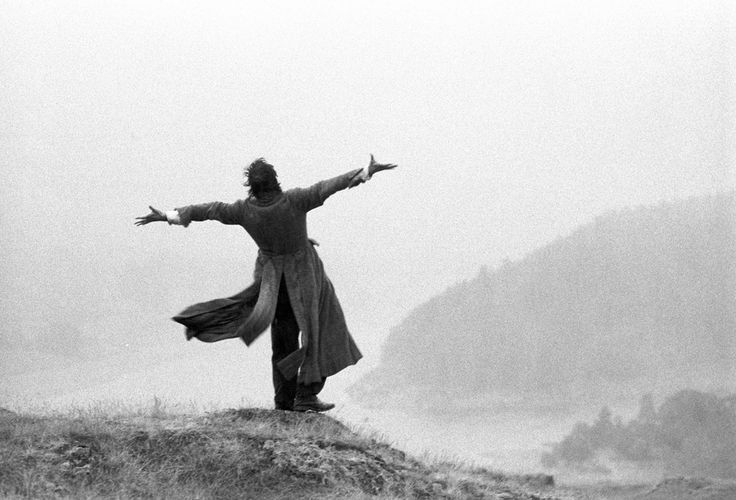
In spite of this capacity for beauty and excellence, there is no redemption for Withnail. The wolves are his only audience, and – as is stated in the screenplay – even they are unimpressed.
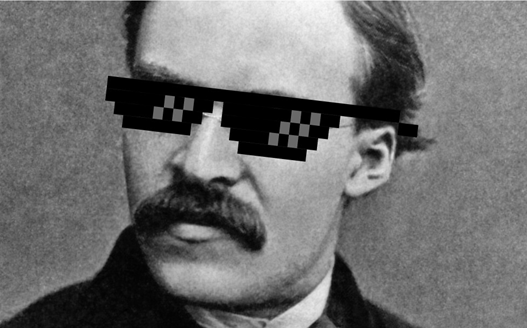
“What is the ape to man? A laughing stock or a painful embarrassment. And man shall be just that for the overman.”
Friedrich Nietzsche
The Ubermensch is an ethical ideal proposed by Friedrich Nietzsche and represents the type of life he believed could be justified as worth living in a fundamentally meaningless world. Nietzsche formulated this ideal to fill the void of purpose, meaning and values created by scientific atheism, which in its pursuit of truth led to the decline of religious devotion in Western society.
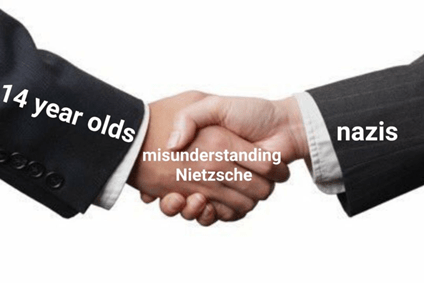
Nietzsche characterises the Ubermensch as an individual who exercises their independent will to define values separately from the conventions imposed by society. By liberating themselves from such herd-mindedness, the Ubermensch is able to transcend the base impulses of the human condition and achieve self-mastery. Due to the Nazi party’s misappropriation of the term to describe the Aryan race, the Ubermensch has come to be misunderstood in modern culture as referring to a type of biologically predetermined superiority based on racial prejudices, instead of an ideal to strive towards. To come to an understanding of the Ubermensch as intended by Nietzsche, it is useful to examine the concept in the context of modern fictional representations.
Representations of the Ubermensch in fiction do not align with the archetypal hero, as this would by definition require alignment with conventional values. Rather, the Ubermensch is often found among fictional antagonists, where they are at liberty to practice unconventional systems of morality.
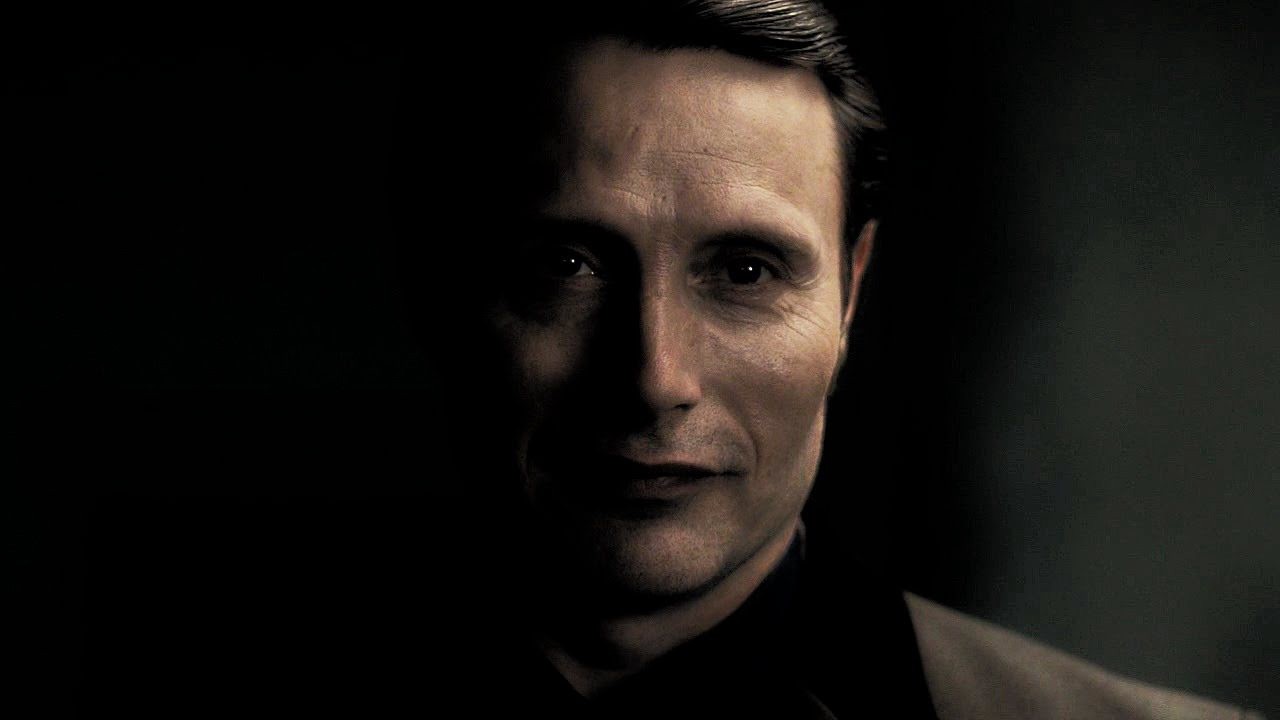
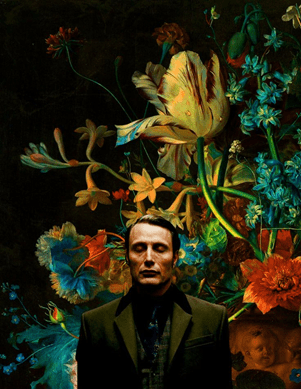
Dr Hannibal Lecter is perhaps the most accurate depiction of an Ubermensch in modern fiction. Hannibal’s consumption of human flesh is a physical expression of his superiority and contempt for humanity, thereby reflecting the transcendent aspect of the Ubermensch. When queried about his eating habits, Hannibal states “it’s only cannibalism if we’re equals”. The perception of other humans as inferior reflects Nietzsche’s assertion that the man is to the Ubermensch what primates are to man.
Man is to Lecter, what primates are to man.
Hannibal’s self-mastery is evidenced by his extraordinary mental fitness and physical discipline. He possesses the mental fortitude to thrive during his incarceration in the Baltimore State Hospital, constructing a mind palace that affords him access to freedom and culture whilst under confinement. Hannibal has also attained a kind of cerebral enlightenment, which is demonstrated by his immense skill in analytical reasoning, synthesising information and astute intuition. Further, Hannibal’s capacity to withstand extreme pain is testament to his physical discipline. This level of self-mastery makes Hannibal his own god and – in his view – affords him the power to decide upon matters of life and death. As he says to Will Graham, “killing must feel good to God too. He does it all the time. And are we not created in his image?”
Hannibal’s self-mastery allows him to successfully assert his will upon others and alter their experience of the world. This reflects the ‘reality distortion field’ famously associated with Steve Jobs, which refers to Jobs’ use of charisma and manipulation to draw others into a subjective universe wherein his impossible expectations seemed reasonable and any ideas were co-opted as his own. Hannibal mirrors this behaviour in his manipulation of Will Graham’s psyche by means of subterfuge and suggestion. In an exercise of reality distortion more powerful than Jobs could have imagined, Hannibal transforms Will’s understanding of himself, ultimately causing him to question his own sanity and innocence.
The pursuit and appreciation of self-defined excellence is reflected in Hannibal’s admiration and practice of fine arts, culinary arts, literature, surgery and music. He is a renaissance man of class and taste, with exquisite attention to detail. Hannibal’s creativity is most fully realised in his murders, which are crafted to visually represent poetic justice in the context in which they were committed.
Exacting taste as regards both finery and food.
Hannibal rejects conventional societal values and has a particular disregard for banality. In fact, Hannibal views ignoble and base behaviour with such strong distaste that he often murders people on account of their rudeness. This nicely captures the ‘beyond good and evil’ concept posited by Nietzsche, who suggests that an Ubermensch’s judgment is not dictated by good and evil, but on the basis of whether something is species-improving or retrogressive.
Given that the greatest example of an Ubermensch is a serial killer, it is reasonable to question whether this concept’s function of elevating the individual over society and rejecting conventional values is inherently malignant. However, judging whether something is inherently good or evil requires engaging in moral objectivism, which is the antithesis of the Ubermensch ideal. Suffice it to say that an Ubermensch could hold values that are considered conventionally “good”; however, they would have adopted them independently, and likely for functional purposes.
The concept of the Ubermensch is useful in distinguishing antagonists who hold a great deal of individual power – true Ubermenschen – from those who are merely reactionary. Arthur Fleck (The Joker) and Travis Bickle (Taxi Driver) are examples of fictional antagonists whose deviance from the norm is imposed upon them. Both Fleck and Bickle adopt anarchic practices and values in response to having been ostracised from society against their will. Their lack of individual autonomy is the opposite of the Ubermensch ideal and instead reflects the slave morality postulated by Nietzsche. Allowing one’s system of morality/thought to be defined in opposition to the norm is equally as herd-minded as conforming.
A reactionary sad boy, not an Ubermensch.
The Ubermensch should also be distinguished from the nihilist, who deviates from the norm due to a desperately cynical world-view in which nothing is perceived to have meaning. As a result, the nihilist does not value humanity or themselves – they reject objective meanings imposed by society, similar to the Ubermensch; however, they do not replace it with something of their own. The Ubermensch is more of an existentialist, transforming the world around them into something meaningful through their strength of will.
When properly comprehended, Nietzsche’s Ubermensch ideal celebrates freedom and non-conformity. In encouraging moral pluralism and self expression, it inoculates the individual against the urgings of tribalism and partisanship that are endemic to modern society. The path of the Ubermensch is nonetheless a difficult one to tread, entailing disapproval from conventional society; however, as Nietzsche says, “the noble type of man feels himself to be the determiner of values, he does not need to be approved of, he judges ‘what harms me is harmful in itself’.”
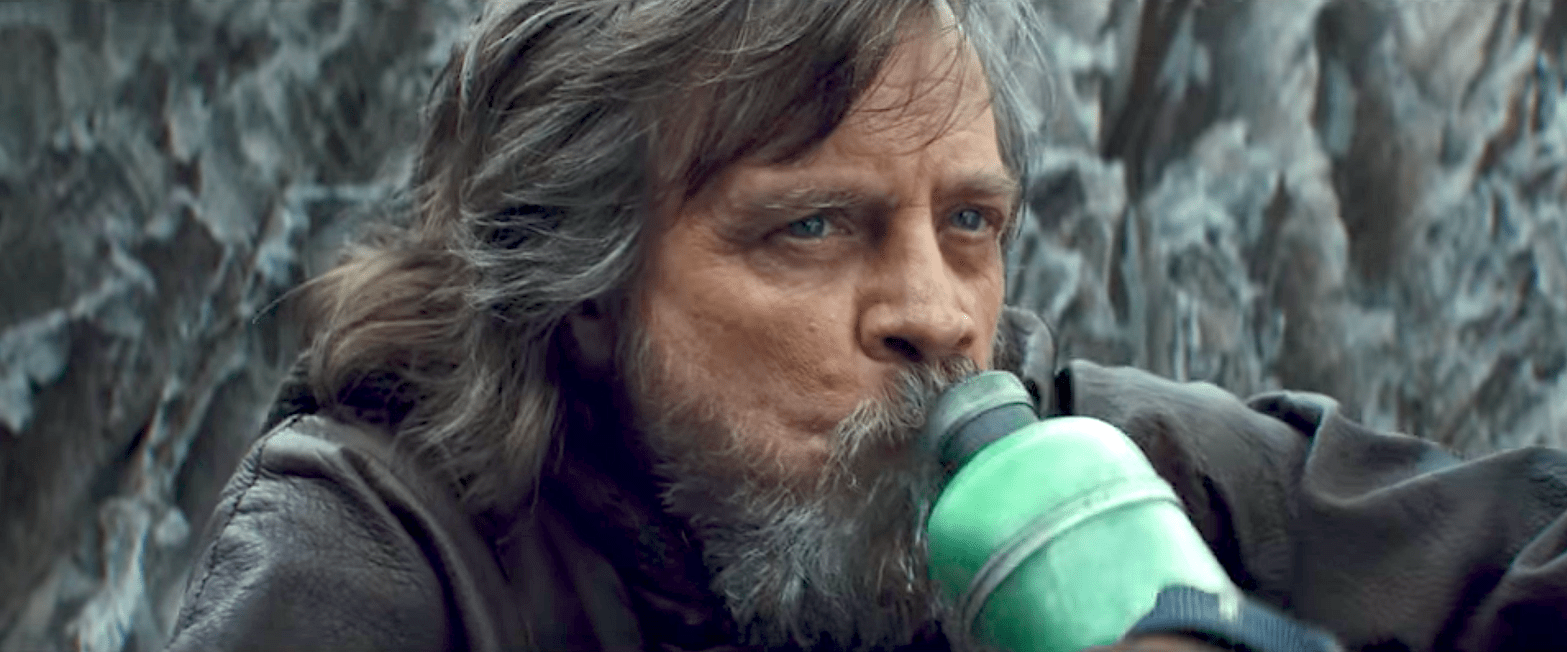
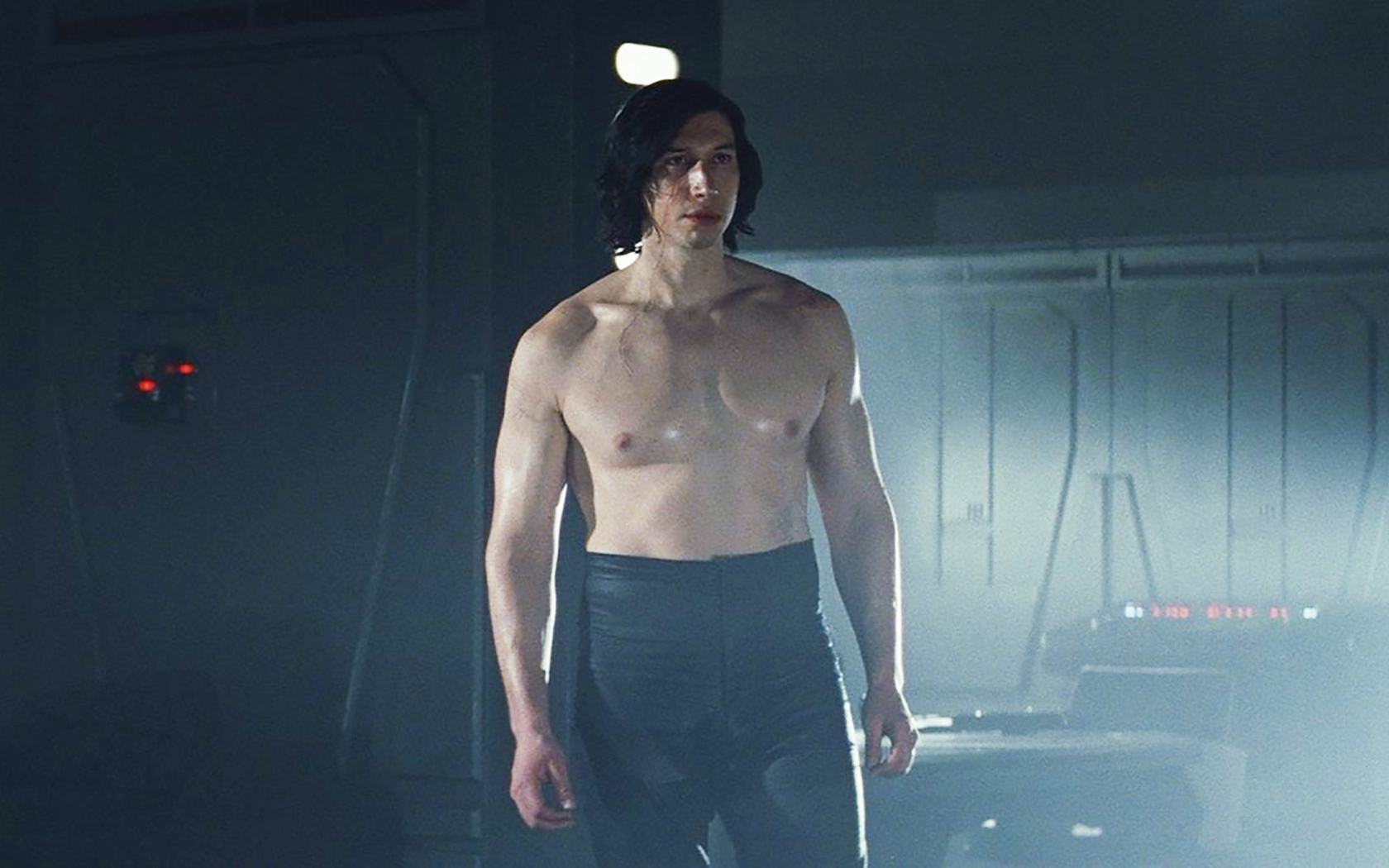
The Last Jedi indulges its audience in a wealth of rich imagery, the most distinct of which is a tie between the unexpectedly sensual reveal of Kylo Ren’s tree trunk of a shirtless torso, and the unexpectedly disturbing image of Luke Skywalker’s green-milk-encrusted beard following his molestation of a sea cow.
These scenes speak to the heart of The Last Jedi, which is founded on the whimsical and borderline-absurd aspect of the Star Wars universe. Many have taken issue with the film for that very reason; however, its lightheartedness feels true to the spirit of the original trilogy. Let us not forget that George Lucas is the man who created Jar Jar Binks. In The Last Jedi, Rian Johnson successfully tears Star Wars from the clutches of militant fans who demand this series of films about space people with magical powers be ‘realistic’. In so doing, he is granted creative liberty and the freedom to take some welcome risks with this narrative.
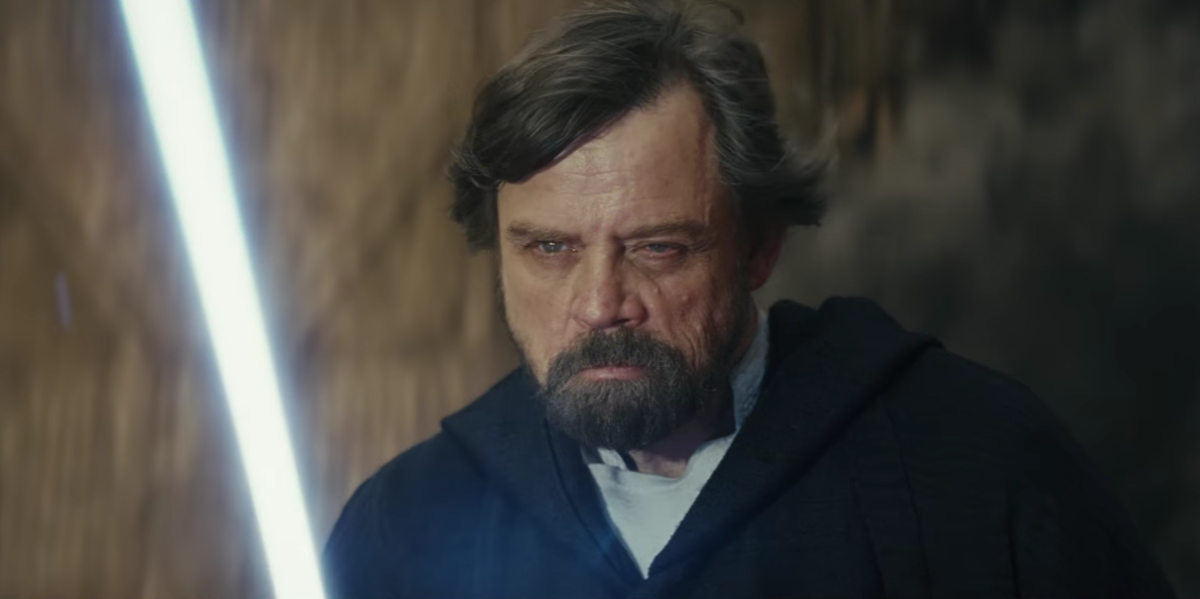
Mark Hamill publicly voiced discontent with Luke Skywalker’s trajectory in The Last Jedi, and there is legitimacy to his suggestion that the disillusioned old man depicted here is inconsistent with Luke’s initial character development. In the original trilogy, Luke was able to conceive of redemption for Darth Vader despite years of witnessing his morally corrupt behaviour. It is thus surprising that Luke’s faith in Kylo Ren would falter to the extent that he considers murdering his protegee. Whilst this serves as a lesson that our idols don’t always live up to our expectations, Luke Skywalker may not be the most appropriate conduit for such a message. It is devastating to witness a character who once embodied hope fall prey to cynicism and fear.
That being said, Hamill does everything in his power to realise Rian Johnson’s vision of Luke Skywalker. Angry Luke Skywalker is a mood. He exudes ‘destroyed by life’ energy and is exhausted by the mere suggestion that he help the Resistance in the fight against the First Order. At the beginning of the film, when Rey passes Luke his old lightsaber and he proceeds to toss it off the cliff behind him, this nicely foreshadows how this character – and in fact the entire film – will subvert our expectations.
Luke’s force ghost, with hair cut.
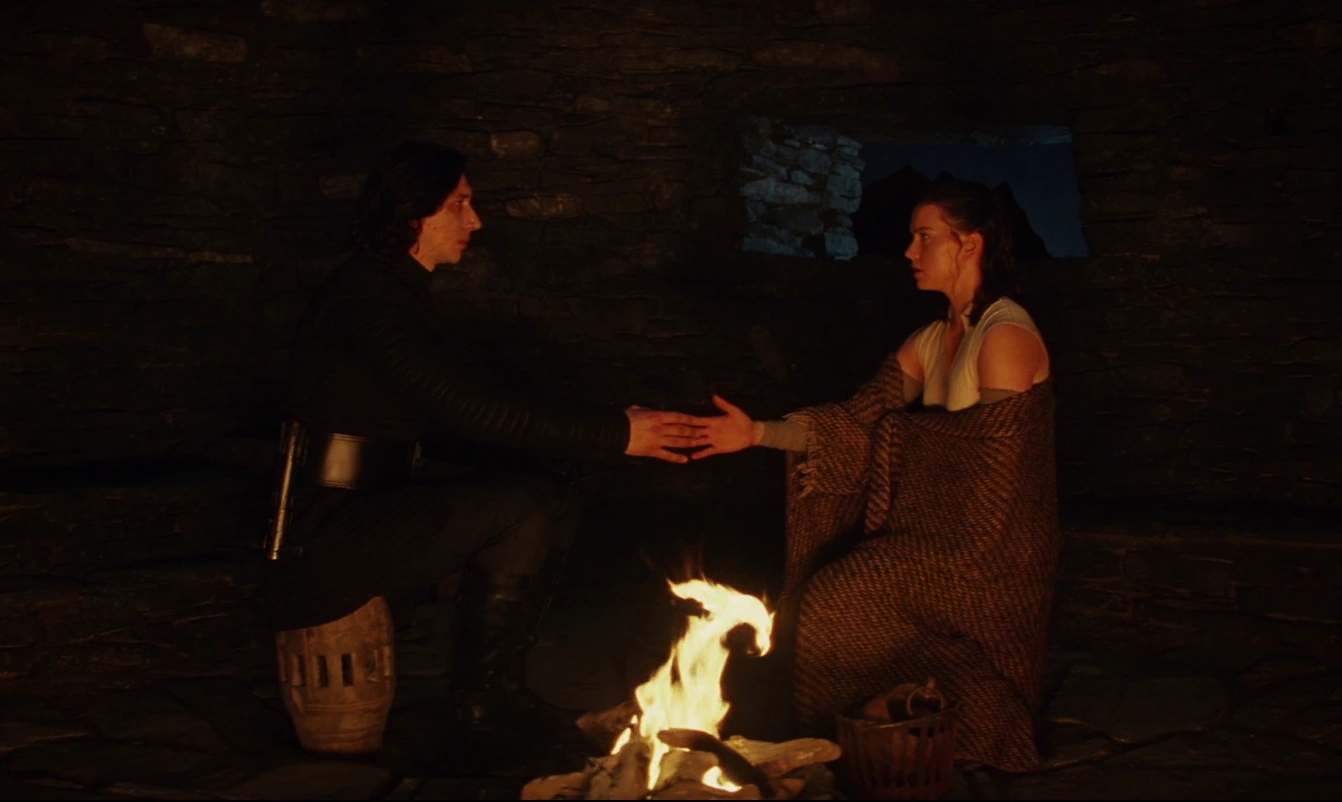
While Luke fails to nurture Rey as anticipated, Kylo Ren unexpectedly comes to fulfill this role through their force connection. The force connection between Kylo and Rey is the masterstroke of the new trilogy and differentiates it from the films that have come before. The Last Jedi provides no sage master to offer guidance; instead, two damaged adolescents must try to support one another after being let down by the people who were supposed to look after them.
Rian Johnson has said that Kylo Ren was the character he was most excited to “get into and write for” when he took on this project and this is reflected in his attention to Kylo’s development. Kylo is not only permitted to be more complex than a simple villain, he is elevated to being a second protagonist.
“He was a Sith, she was a force-sensitive scavenger, can I make it any more obvious?”
The duality of protagonists is encapsulated in the visually arresting fight sequence in Supreme Leader Snoke’s throne room. This is a great vehicle for presenting the immense combined power of Kylo and Rey and their natural chemistry in combat. It also foreshadows the prophesied force dyad that we will come to learn about in the next chapter of the new Star Wars trilogy.
Part of what makes this scene so powerful is the attention to detail that has gone into the setting and cinematography. Rian Johnson has done an incredible job on such details throughout the entirety of The Last Jedi and this becomes more apparent upon watching The Director and the Jedi, a behind the scenes documentary exploring how episode VIII was brought together. In particular, it showcases Johnson’s commitment to using animatronic practical effects, which render the Star Wars universe tactile in a manner that could not be achieved with CGI.
The chemistry!
The Last Jedi is not without its faults. While the Canto Bight set is an aesthetic marvel, the events that unfold therein are not. Benicio Del Toro’s character – DJ – is not convincing as a Han-Solo-esque slicer with a heart of gold. We therefore do not feel the intended surprise when he deceives Finn and Rose.
Disney’s version of Star Wars also harbours a preoccupation with the facade of death as a means of establishing a false sense of stakes. Throughout the new trilogy, main characters are killed and resurrected so often that it renders the concept of death completely insignificant. The most obvious example in The Last Jedi is Leia’s ejection into space by way of spaceship explosion. While all hope seems lost, Leia saves herself at the last minute by using the force to navigate to another ship. This scene is doubly problematic given the comical appearance of Leia’s prone body flying through space without a helmet.
Reminiscent of the 1978 Superman movie.
Unlike it’s predecessor, The Last Jedi takes plenty of risks; some of which produce compelling and original scenes while others result in cringe-worthy sequences that are difficult to watch. This film stands out as the most daring and unique of the new Star Wars trilogy and is therefore most true to George Lucas’ own cinematic approach. Rian Johnson clearly has a deep appreciation of the original films; however, unlike J.J. Abrams, he is able to use this as a foundation for new ideas rather than merely replicating what has come before.
Not being the type to give up on something problematic, I returned to The Force Awakens this week as the starting point for my incremental Star Wars marathon. By incremental, I mean I’ll be watching the movies in my own good time instead of bingeing all nine like a psychopath. I would like to say my return to Star Wars was prompted by an open mind and healthy sense of adventure. In reality, I was simply interested in once again watching Adam Driver portray the angry space boy that is Kylo Ren.
Cant believe i still see the name “kyle ron” on 2020 as a comeback. Are you okay<3 pic.twitter.com/xR8ZuvTKkc
— kesha debicki winstead (@bladerunnrr) June 20, 2020
That bass-line though.
The Force Awakens is not groundbreaking in terms of plot; however, it is successful in pairing familiar tropes from the original trilogy with modern cinematography. While the result is somewhat familiar, witnessing Star Wars in high definition with realistic special effects breathes life back into the series and is a safe basis for reintroducing the world to Star Wars.
There is a certain cognisance to the characters in The Force Awakens that differentiates them from the largely conventional cast of A New Hope. This is in part due to Disney’s effort to ensure diverse representation in their Star Wars universe. While the identity politics of this are of marginal significance to the quality of the film, the diversity of the cast has resulted in a unique set of characters who lend a certain richness to the films.
Throughout his career, Adam Driver has proven himself to be an actor with great emotional intensity and has been cited as “our generation’s greatest yeller” by GQ magazine. Who can forget the epic fight between Adam and Jessa in season 5 of Girls, for example? Driver brings this same chaotic energy to his performance as Kylo Ren, perfectly illuminating the conflicted and emotionally volatile nature of this character.
Our introduction to Rey in The Force Awakens sees her clambering through the carcasses of deserted Star Destroyers and AT-ATs. This is a powerful image, reflecting how filmmaker and audience alike are navigating dead history in this new series of Star Wars films. Rey is rendered miniscule against this landscape, nicely speaking to the difficulty of establishing a new hero in the Star Wars canon.
That being said, while Rey is certainly a likeable character, she is as bland as the desert planet Jakku from which she hails and lacks the complexity that would make her a truly interesting hero. It was sufficient for Luke Skywalker to be a misty eyed do-gooder because in the 1970s, the concept of the plot alone was hugely innovative. There is a burden on Rey to differentiate herself in order to justify a new series of Star Wars movies. What is the point of making three more films about another minimally conflicted orphan who we all know will do the right thing in the end? At no point is the temptation of the dark side truly in question for this character and that is a failing for a series that considers the internal struggle between light and dark to be its central theme.
Rey is only rendered interesting by her interactions with her environment and other characters. Finn is a good example of this. In part due to John Boyega’s charisma and the inherent intrigue of being a Stormtrooper turned good guy, Finn stands out as particularly vibrant. There is also more room within his character for comedy and animation than is afforded to Rey, which makes him more palatable.
In spite of its conventional plot, The Force Awakens seems to promise the development of a unique dynamic between Rey and Kylo which would differentiate it from its predecessors. When Kylo discovers that Rey can use the force, his interest in her appears to stem from the possibility of understanding and companionship more-so than the prospect of harnessing her power to serve the First Order. If this is explored more thoroughly in the films to come, this will prove to be a fundamental and compelling divergence from the relationships between Luke and Darth Vader or Anakin and Darth Siddius.
The Force Awakens plays it safe and seeks to get original Star Wars fans on side. This proves to be the film’s strength and weakness. What it lacks in innovation, it makes up for with fun call-backs and nostalgic charm. There is also an inherent sense of wonder in seeing the Star Wars universe rendered more realistic than ever before. That being said, beneath the surface there is a promise of something more unique to come. Greater risk taking and creative license in the future is certainly more likely now that the initial foray back into Star Wars has been met with such success.
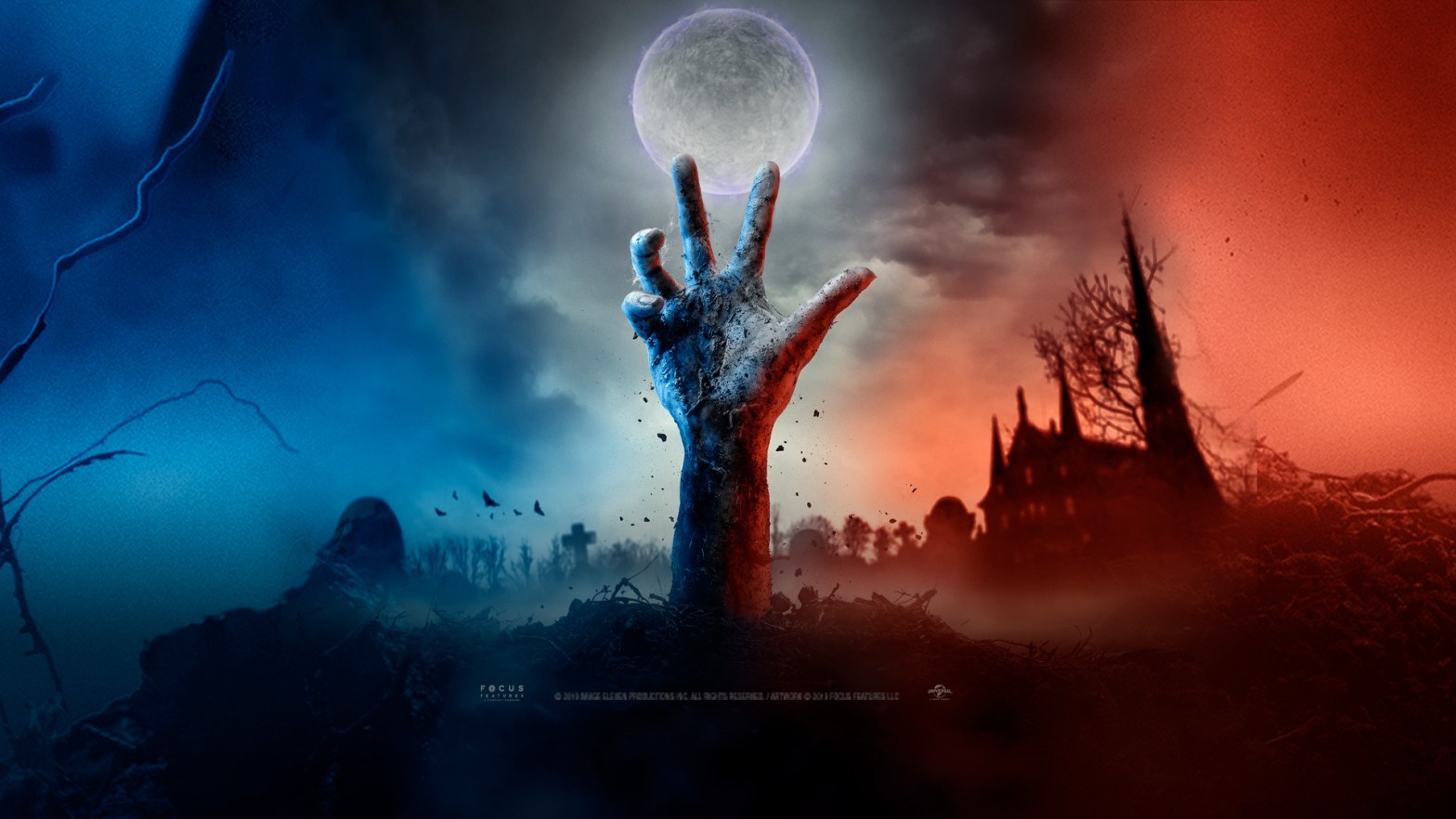
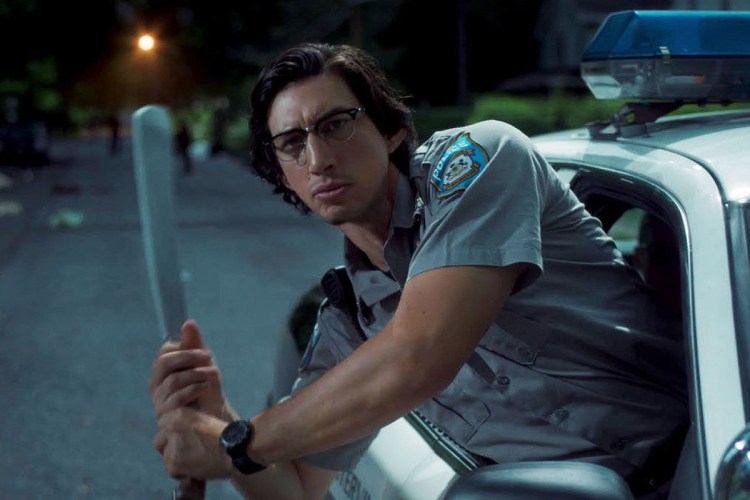
The Dead Don’t Die follows a local police outfit comprised of Cliff (Bill Murray) and Ronnie (Adam Driver) as they deal with a zombie uprising in the claustrophobically small town of Centerville. In classic Jim Jarmusch style, it is perhaps misleading to say that these characters deal with anything; rather, they have meandering conversations while the world falls to pieces around them. The dry exchanges that take place in the police car as Cliff and Ronnie patrol an increasingly apocalyptic landscape are the highlight of a film which otherwise threatens to alienate audiences with its surrealist and self-referential style.
While it may appear to be a classic entry in the zombie comedy oeuvre, The Dead Don’t Die is a self-aware satirisation of the genre – Zomception, if you will. The self-referential nature of the film works in some respects. For example, fans of the genre are likely to identify with Bobby Wiggins (Caleb Landry Jones), a gas station attendant with a vast collection of horror memorabilia. It is entertaining to watch Bobby use his encyclopedic knowledge of genre films to navigate the undead uprising. He is essentially a manifestation of the horror buff viewer operating within the film. More than once he points out and labels tropes, such as a car that he observes is “very George Romero”.
The sense that characters are aware of being within a film is omnipresent throughout The Dead Don’t Die. Adam Driver’s character, Cliff, is particularly sentient of this and at times makes explicit references to the script and theme music. The novelty of this will appeal to viewers who can stomach a touch of absurdity and appreciate the multi-layered self-awareness of the film.
However, the meta nature of The Dead Don’t Die is at times grating. This is most evident when it attempts to satirise the genre trope of zombies embodying consumerist culture. Jarmusch’s undead cling to what they valued when they were alive and this results in an uncomfortable scene in which a crowd of zombies wield smartphones and moan “wi-fi” in unison. As the glowing screens illuminated their decaying faces, I could only cringe at the heavy handedness and cliche that I was witnessing. This is clearly intended to be amusing by pushing a trope to its extreme, however fails due to a lack of subtlety and nuance. Making fun of things is not sufficiently funny if it is not done intelligently and I am surprised that Jarmusch was not vigilant enough to remedy this.
That being said, much of the deadpan humour throughout the movie is effective and this is largely attributable to Bill Murray and Adam Driver’s performances as Cliff and Ronnie. Their emotional neutrality throughout the majority of the zombie uprising serves as a hilarious juxtaposition. Murray in particular has a knack for delivery that highlights the contradiction between words and context, a skill he has demonstrated time and time again throughout his career.
One of Jarmusch’s great qualities is his patience, allowing scenes to play out at length, with the camera’s lens steadily trained on events as they unfold. Jarmusch also ornaments his films with rich details. A favourite of mine is Farmer Miller’s hat that reads “Keep America White Again”, an amusing reference to the red MAGA hat that is so politically charged in modern culture.
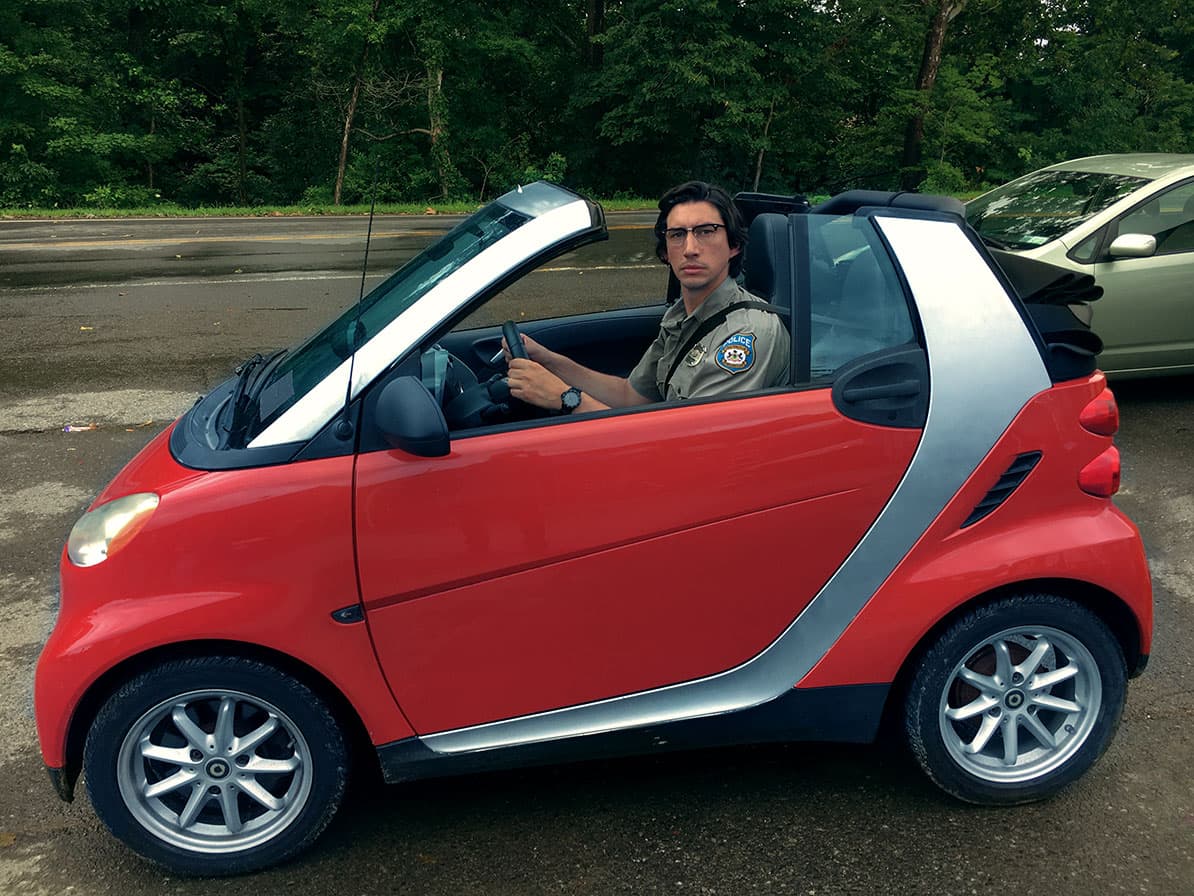
The Dead Don’t Die engages in a level of absurdity that vacillates between delightful and cringe worthy. It works well in the context of minor comedic incongruities, such as Ronnie’s earnest ownership of a convertible smart car in spite of his physical stature.
Hilarious
Yet there are times when The Dead Don’t Die pushes its surrealism too far, rudely bringing the audience’s willing suspension of disbelief crashing to the ground. The Tilda Swinton storyline is particularly problematic in this respect. Suffice it to say that spaceships have no place in the zombie genre.
The Dead Don’t Die is a film that is great for the same reasons it is terrible. Viewers’ enjoyment will likely be based on their capacity for nonsense and their willingness to forgive a handful of poor directorial decisions. If films had personalities, this one would be firmly situated within the hipster subculture as it’s main purpose appears to be poking fun at an institution – the zombie comedy complex.
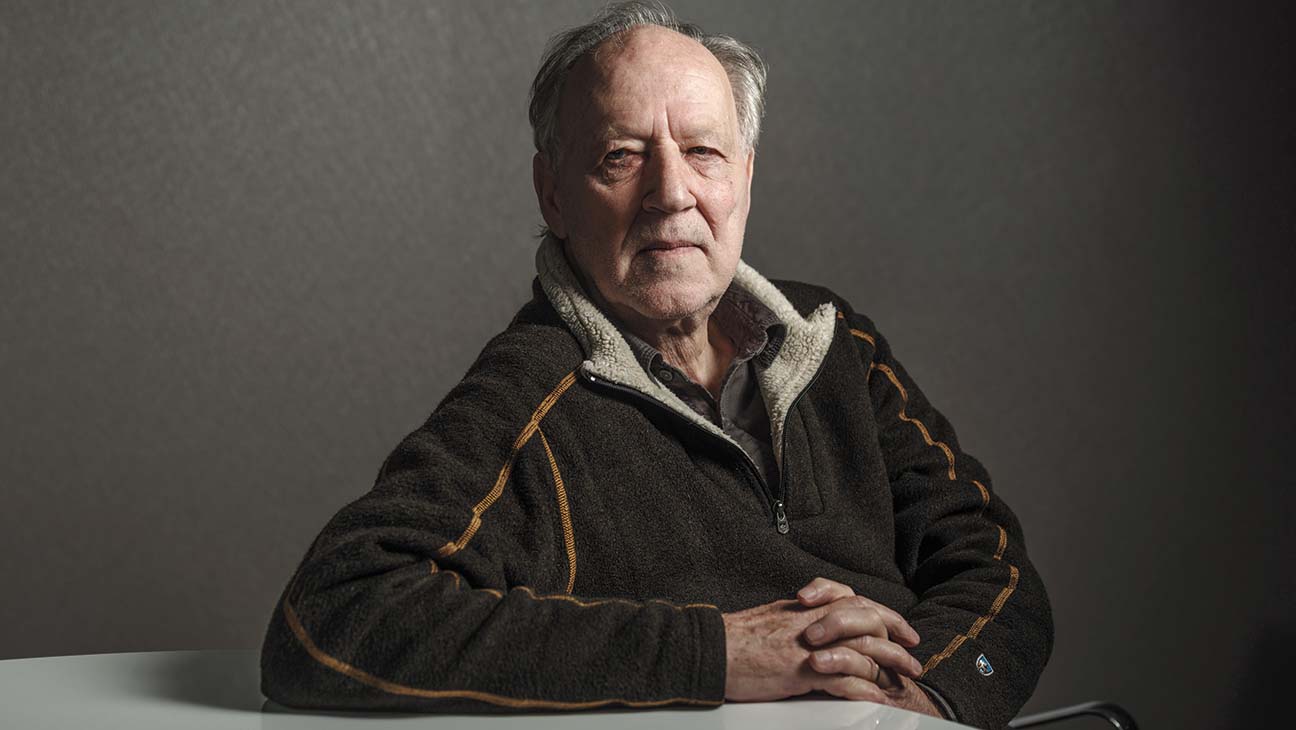
Land of Silence and Darkness takes deaf-blindness as its subject and charts a gradual journey into isolation. Bereft of humanity’s common means of communication, Herzog marvels at the attempts of those who are deaf-blind to understand others and make themselves understood. This project feels true to Herzog, given his self-confessed admiration of the illiterate, while also being the gentlest film in his ouvre.
The film follows Fini Straubinger – a woman who was rendered blind-deaf at age 19 following an unfortunate accident. In Straubinger, Herzog has found an ideal entry point to the world of those who can’t see or hear. She approaches every deaf-blind person she encounters by grasping their hand and assuring them “I am like you”. This is a powerful act of acknowledgment for people who are often overlooked and left to inhabit their own isolation. Straubinger herself is privileged in that her deaf-blindness was acquired. As such, she has the privilege of having once known the world and this allows her to support others who are similarly afflicted.
Some of the subjects in Land of Silence and Darkness have not had this privilege and the way that this shapes their lives, thoughts and expression is intriguing. During a visit to a rehabilitation facility that houses deaf-blind adolescents, it is explained that it is considered impossible to teach children born with this condition abstract concepts such as good and bad. The notion that their minds cannot be fully awakened without the ability to see and hear is deeply harrowing, and generates a sense of mystery regarding their inner state.
Herzog takes a particular interest in a 22 year old called Vladimir, who was born deaf-blind and raised by a father who didn’t establish a means of communication with him, thereby failing to tether him to the world in a meaningful way. Consequently, Vladimir cannot walk or speak. He rolls about on the ground, his sole means of expression are blowing raspberries and throwing a ball at himself.
Herzog’s steady, lingering camera reveals a restlessness in Vladimir; a sense that there is much within him that cannot be expressed. Our only clue as to his internal state is when he is handed a radio, which he cradles in his arms while holding a hand over the speaker. It is here that Vladimir stops his restless motion, having finally found a way to interact with the world. His relief is palpable.
Vladimir receives the sacred radio that promises connection to the outer world.
Herzog is a master of powerful imagery, and Vladimir’s response to the radio speaker is only one of many incredibly moving images in Land of Silence and Darkness. Herzog’s camera also shows us one of the adolescents in the rehabilitation facility as he revels in a shower, displaying a joyous lack of inhibition as the water splashes over his scalp. When the youth tentatively enters a swimming pool, we are once again reminded of the novel and unsettling nature of a world that one cannot perceive by sight or sound.
Herzog has receivedcriticism for having fabricated some aspects of Land of Silence and Darkness. Of particular concern is that he scripted some of Fini Straubinger’s dialogue in the film. However, the dialogue scripted by Herzog serves to eloquently express the most evocative themes underlying the real events and topics explored in the film. It therefore supports rather than diminishes its subject, and speaks to Herzog’s ability to reveal the “ecstatic truth” underlying the prosaic.
Land of Silence and Darkness makes visible the difficulties of human communication and the terror of not being able to make oneself understood. It is at once Herzog’s quietest film, while remaining deeply affecting. This is even more impressive when one considers that it was created with a budget of $30,000, three crew members and a mere 3 hours of footage. As Herzog says “you only need a good story and guts to make a film, as well as the belief that it must be made”. This is clearly reflected in Land of Silence and Darkness, which feels like an absolutely vital piece of work.














 View Kid