Okja

Of all the things that could have convinced me to become a vegetarian, I never expected it would be the tale of a grossly anthropomorphised super pig. Such is life under the influence of Bong Joon-Ho, a modern master of science fiction.

Okja is premised on the alleged discovery of a new breed of pig by the Mirando Corporation, a multi-national meat conglomerate in a much-needed phase of re-branding. To promote this new product, Mirando engages 26 farmers from around the world in a competition to raise the best super pig within 10 years. One such pig is Okja, who is raised lovingly by a South Korean farmer and his daughter, Mija. In fact, they raise Okja so well that Mirando takes an unfortunate interest in her when the 10-year mark arrives. What follows is a dark journey through the ugliness of the livestock industry as seen through the eyes of Okja, while Mija follows determinedly in her wake, the horror of it all made worse by her incomprehension.  

Related image

I tend to be resistant to movies that have a clear social or political agenda; however, there was a playfulness and self-awareness to Okja that superseded my usual gripes. In his titular super pig, Bong Joon Ho has constructed a sympathy machine fitted with expressive human eyes, a communicative voice, uncanny intelligence and bucketfuls of empathy. She can even cry for god’s sake. Such hamminess would usually provoke eye rolling and disengagement, but through his incredible style and commitment to leaning into absurdity, Bong Joon Ho instead transports us to a childlike state of mind where we want to believe that animals have feelings too. This has the dual effect of making us fall in love with Okja and causing us greater pain once the film’s nightmarish second act rolls around.

Bong Joon Ho succeeds in making Okja digestible by conveying an awareness of the flaws of animal advocacy groups, thereby avoiding the preachy tone that is a disaster for films like this. The Animal Liberation Front (“ALF”) that seeks to reveal the cruel practices of organisations like Mirando is depicted as overly sensitive and ironically self-righteous, without ever being degraded. This is helped by a good sprinkling of kitsch and twee – rose petal bombs included- which renders the group endearingly eccentric. The depiction of ALF reflects one of Bong Joon Ho’s greatest strengths – he grants every character in his narrative worlds a sense of depth; even his secondary characters have idiosyncrasies.

Mija embodies the South Korean comic hero. She is small yet powerful, incredibly tenacious, stubborn and eccentric. In this respect, she is very similar to Do Bong Soon, the protagonist of Strong Girl Bong Soon. Overall, Okja shares a quality prevalent in South Korean films and TV, in that it extends our willing suspension of disbelief to incredible lengths. The directors and screenwriters who work in this space seem to lack the hesitance to work in a realm that is slightly outside of reality, allowing them to create truly unique films.

Mija’s ideological ancestor, Strong Woman Do Bong Soon, easily lifts a car above two astonished men while rose petals fly through the air.

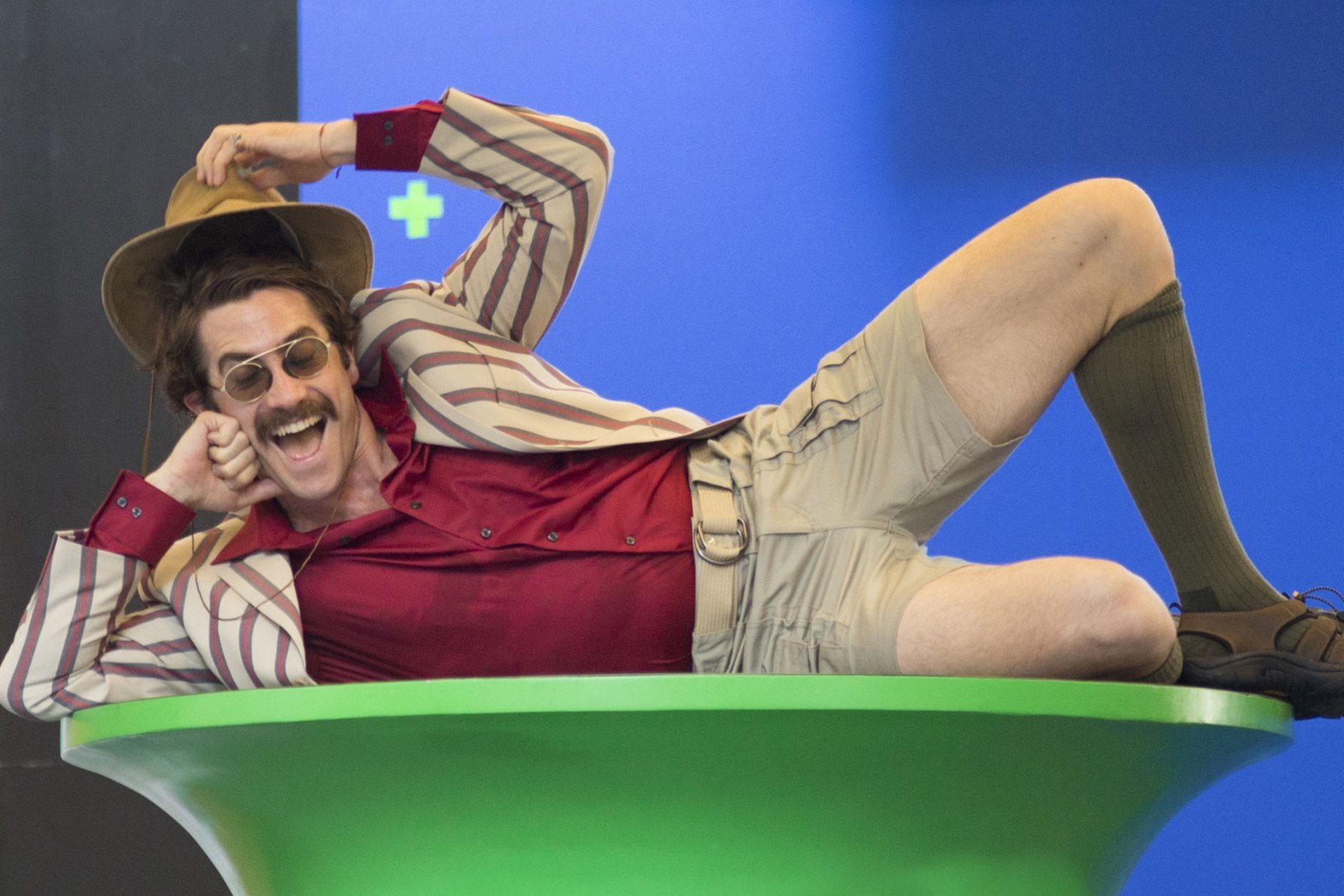
In Okja, Jake Gyllenhaal once again displays a penchant for acting completely insane. Here he portrays Dr Johnny Wilcox, a zoologist whose fading relevance threatens his position as the public face of the Mirando corporation. Wilcox is a classic shit heel and antagonises the audience to the extent that many wish he wasn’t even in the film. However, as I see it, the hostility he evokes is merely a testament to his success as an antagonist.

One of the most memorable images in Okja is the opening sequence, wherein Lucy Mirando is pitching the super pig project to an intrigued audience. While her presentation is kitschy and delightful, we can see Giancarlo Esposito circling the shadowy rafters above like a malicious shark. It is clear that he has orchestrated the event and is revelling in its success. This encapsulates the layers of light and dark that are at play in Okja.

In the end, Bong Joon Ho pulls out of what feels like a nose-dive into deep tragedy, while never allowing us to forget what we saw on the way down.
Taxi Driver

“Loneliness has followed me my whole life. Everywhere. In bars, in cars, sidewalks, stores, everywhere. There’s no escape. I’m God’s lonely man.”

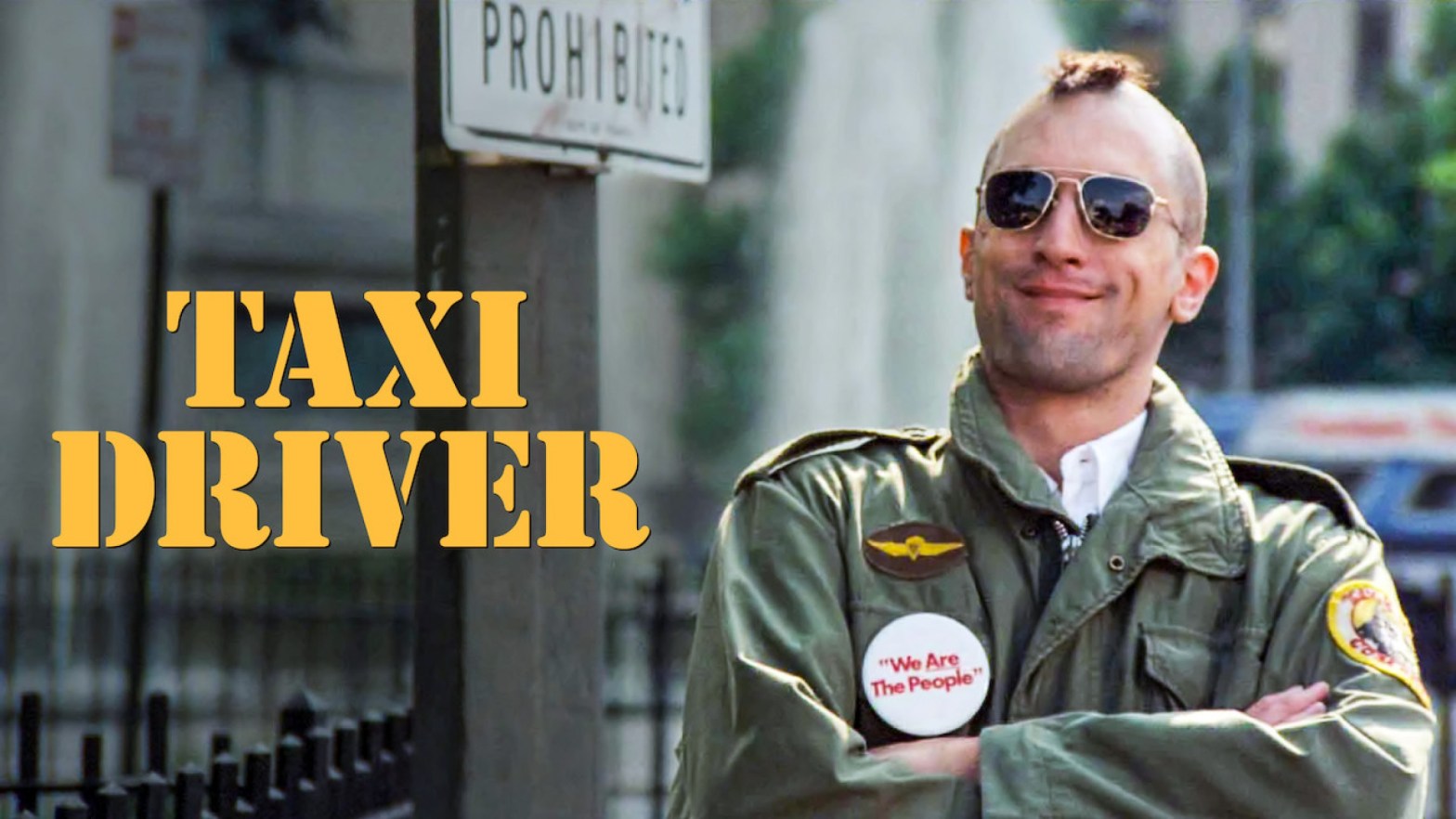
Taxi Driver treats loneliness as a disease with which Travis Bickle is unmistakeably afflicted. It’s not a story of redemption; rather, it documents a steady spiral into alienation and instability which is at once discomfiting and intriguing.

It’s difficult to make a good film about a lonely person, as their solitude strips away the interactions that inform how they fit into the world. However, this supports the characterisation of Travis, as it reflects his detachment and inability to relate to those around him. Without other characters to bounce off, we don’t have a reference point for interpreting his behaviour nor any way of relating to other characters in the film. This situates us within the perspective of Travis himself, who is so socially disoriented that he takes his romantic interest, Betsy, to an explicit film during their second date. It is ironic that Travis’ main means of communicating with the audience is through his journal, a silent void where he speaks in aphorisms, almost as if attempting to counsel himself.

Image result for taxi driver gif
Go-go Gadget!

While Taxi Driver is more a character study than social commentary, it seems to attribute some responsibility for Travis’ despair to the society in which he lives. The phrase ‘we are the people’ is plastered throughout New York City in Taxi Driver as a slogan for the Palentine political campaign. In a printing error, ‘we’ has been underlined instead of ‘are’, suggesting a subtext that only the interests of certain groups are represented by community leaders and those outside the mainstream are necessarily ignored. This aspect of Taxi Driver clearly influenced Joker‘s bitter portrayal of a world that is indifferent to outsiders, whether they be stricken by mental illness, poverty or otherwise.

Travis Bickle isn’t a particularly endearing character and his anger is likely to repel audiences who might have otherwise sympathised with his isolation. However, I disagree with the rampant characterisation of Travis as a man who is afraid of his ‘imagined’ obsolescence. Travis’ obsolescence isn’t imagined; rather, he is pushed to the periphery of society due to his failure to fit within the norm. Each of his attempts to construct a normal life fail. Travis fails romantically with Betsy due to his misunderstanding of social mores and fails to make himself understood when confiding his crisis in Wizard, a fellow taxi driver. The world doesn’t have anything to offer Travis, and when he turns his gun on himself, it won’t even grant him the dignity of taking his own life.

Some people revile Travis Bickle as an early incarnation of an incel, citing his sexual frustration and social ineptitude as evidence. However, Travis’ saviour complex and compulsion to feed into his own rage is far more reminiscent of the social justice warriors of the modern world. Despite his disgust at New York City and the ‘scum’ that inhabit it, Travis is constantly drawn back to 42nd street, where he obsessively observes the criminality and prostitution that he claims to find so detestable. This reflects the modern compulsion to dig up inflammatory controversies in the media for the purpose of calling it out and causing outrage. Taxi Driver understands that we are fascinated by our own repulsions and, disgusted by this, seek to purge ourselves through aggressive censorship. Perhaps Travis Bickle would be pleased to see that his vision of a “real rain” cleansing the world has come to fruition, if not in the way he had anticipated. Instead of prostitutes being washed off the streets of New York, media platforms have been washed clean of triggering material.

Watching Taxi Driver is an uncomfortable experience. We are made to share in Travis’ experience of loneliness, rage and rejection, and by the end, we, like Travis, find his act of violence to be cathartic. In providing Travis with relief, it releases us from the relentlessness of his existence. I wouldn’t say that Taxi Driver is a film that everyone should watch and it’s certainly not a film that everyone would enjoy. However, it will resonate with those who struggle to find their place in society, especially in a world rife with extroverted ideals. For such people, Taxi Driver offers a sense of acknowledgment even while offering no solutions.

As Patrick Bateman once said:

“This is not an exit”

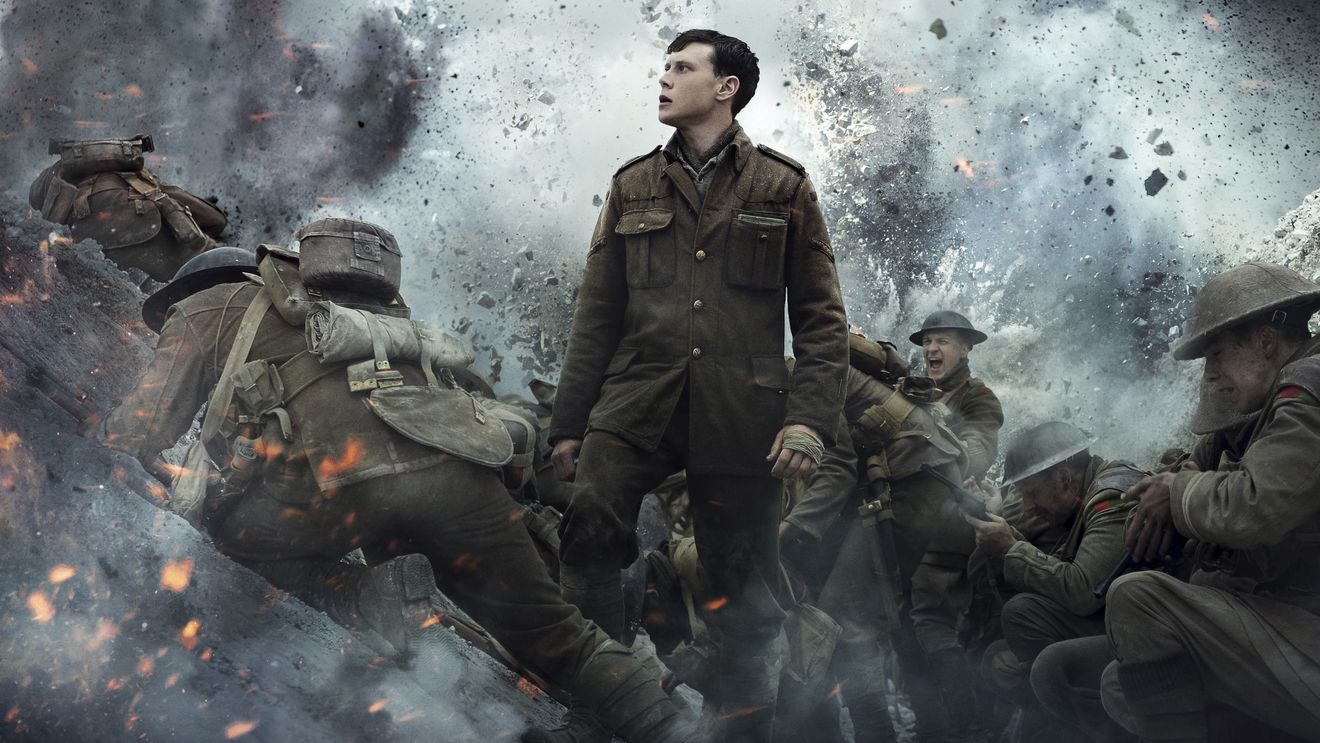
1917

1917 takes place during World War One and depicts the journey of two young soldiers, Blake and Schofield, tasked with delivering a message to the second battalion before dawn, lest they walk into a trap that will end in mass slaughter. While its premise is simple, the film has attracted widespread media attention for its innovative cinematography, as it is styled as a single continuous shot. The question of whether 1917 is a good film depends on whether we view this decision as supporting the narrative, or as a gimmick to veil a thin story.

The use of a continuous shot is effective in that it imbues every sequence of 1917 with a sense of tension and urgency. The camera never cuts away from the protagonists and therefore the audience has no reprieve from the impending deadline. A testament to the power of this technique is the immense anxiety I felt whenever the soldiers stopped moving.

The continuous shot is also highly immersive. It powerfully conveys the grueling relentlessness of war as it requires the audience bear witness to every step of the soldiers’ journey, with all of the horror, idleness and fear that this entails. Further, in choosing to restrict the film’s scope to these particular young, low-level soldiers while using a wide-angle lens that emphasises the immensity of their environment, we begin to comprehend the overwhelming nature of World War One.

Image result for 1917

In spite of the attention paid to visual details, 1917 neglects to engage in character development, preferring to use its characters as symbols that service the broader themes of the film. As a result, it is nigh on impossible to form an emotional connection to them. The two protagonists appear to represent the conflict between idealism and disillusionment in the discourse surrounding WW1. Blake represents idealism – he attributes value to medals, respects his orders and has a strong conviction they will succeed in their mission. There is a scene where the two young soldiers come across a field of cherry trees that have been chopped down by the German army. Blake points out that the seeds will fall and spread, causing the orchard to become more fruitful for the devastation that has been wrought upon it. While this scene highlights Blake’s idealism, the metaphor here is so contrived that it was embarrassing to watch.

Meanwhile, Schofield represents realism. He regards medals as “pieces of tin” and swaps his for a bottle of wine. His growing disillusionment is evident when he says “this isn’t even our country”, acknowledging the apparent futility of their involvement in the war. While characterising Blake and Schofield in this manner makes clear the themes of 1917, it renders them mere vehicles for metaphor instead of fully realised characters.

I get the impression that 1917 leans heavily into metaphor as it wishes to be regarded as an important film; however, this intentional grasp for significance causes the film to feel inauthentic. This was evident in Benedict Cumberbatch’s performance as Colonel MacKenzie, whose dialogue feels desperate to be quoted:

“I hoped today might be a good day. Hope is a dangerous thing.”

There is only one way this war ends. Last man standing”.

Instead of attaining the sought after significance, the lines come across as cheap clichés and verge on parody.

1917’s wish to be considered important extends to a stilted scene wherein Schofield meets a French woman and her baby hiding amongst the rubble of war. It is difficult to comprehend why such a scene was considered necessary in the context of this film. I surmise that it was an attempt at acknowledging the impact of the war on the French people and covering all bases of cultural representation. It’s a shame that this seems to have been the same decision made in every other war movie, thereby making the scene come across as derivative and pandering.

The most gripping aspect of 1917 is Andrew Scott’s performance as Lieutenant Leslie, which was a refreshing source of authenticity and emotional intensity. Leslie is responsible for guiding Blake and Schofield out of the trenches and does not hide his bemusement at the absurdity of their undertaking. In his one minute of screen time, Scott conveys frustration, despair, compassion and amusement at the insipid orders that have been issued. He embodies the multitude and conflicting perspectives on WW1, which is historically considered to have been a war about nothing in which a generation was “slaughtered in stupid battles planned by stupid generals”. I would like to have seen a version of 1917 that focused less on constructing stunning visuals and instead leaned into drawing out authentic performances such as that given by Scott. I imagine that this would not only have been more cost-effective (the film’s budget was $100 million dollars), but would also have imbued the film with greater meaning and power.

1917 is a fine film. While the novel decision to use a continuous shot is visually interesting and supports storytelling in some respects, the film lacks depth. Accordingly, 1917 cannot withstand repeat viewings and is ultimately an inconsequential piece of momentary intrigue. For this reason, it is concerning that 1917 was awarded the Golden Globe for best drama. If awards are indeed a reflection of what we value in cinema, it would appear we are moving towards a media landscape rife with costly stunts and empty platitudes.

Werner Herzog once remarked that:

some directors use flashy tricks because they know the material isn’t strong enough to sustain a passive camera. It’s a giveaway that I’m watching an empty film.”

Such was my experience of watching 1917.

Nightcrawler

Nightcrawler is a gloriously dark journey through night-time Los Angeles, where Louis Bloom (Jake Gyllenhaal) is making a name for himself as a “stringer” – a freelance journalist who captures graphic footage of crime scenes, turning a profit by selling it to TV stations. Unlike many journalist protagonists who came before him, Lou doesn’t endeavour to walk a tightrope between legitimate reporting and exploitative intrusion; instead, he shamelessly scavenges for the most provocative – and therefore most profitable – material, going so far as to engineer crime scenes to create the grisliest effect. Lou’s manipulation of the world around him is not limited to the crimes he stages; rather, it extends to all aspects of his life, which he is able to manipulate to his advantage. Nightcrawler is a fantastic film because it delights in Lou’s capacity to make his desires manifest, and depicts his tenacity and nerve with humour. It succeeds because it never defers to its audience with obligatory scenes, such as explaining away Lou’s behaviour or doling out the justice that many audience members yearn for.

Nightcrawler attests to the power of cinematography to support characterisation and sub-text. A wide-angle lens is paired with shallow depth of field throughout the film, often rendering everything on screen out of focus except for Lou. This serves to reflect Lou’s worldview, in which he is the only thing that matters. Lou’s isolation from other people is reflected in the framing of shots, which frequently position him on his own rather than in over-the-shoulder or two-shots which would signify intimacy with other characters. Even when sharing the frame with another person, long shots are employed to suggest distance. As a result, Lou’s aloneness in the world is palpable, his separation from society conveyed through visual techniques.

Related image

I found the scenes where Lou is capturing footage on his camera to be the most visually interesting. While the crime scenes and dead bodies that comprise Lou’s subject matter are presented as blurry and out of focus through the film’s lens, we can simultaneously see the images depicted with clarity through the viewfinder in Lou’s camera. This demonstrates how Lou’s interest in reality and the world around him is contingent on its purpose within the media, and ultimately his own success.

Nightcrawler could not have succeeded without Jake Gyllenhaal’s fantastic portrayal of the voracious Louis Bloom. It was satisfying to watch Gyllenhaal cast against his usual type of wide-eyed ingenu here. His expressive eyes, usually employed to fawn over women in romantic comedies, are disturbingly repurposed in Nightcrawler to express his fascination with the suffering of others, and how it will serve his lofty ambitions. Gyllenhaal simultaneously conveys emotional detachment towards the world around him and emotional intensity towards that which is incidental to his success.

A reading of other reviews regarding Nightcrawler suggests there is a multitude of ways of reading this film. Some view the film as a commentary on the exploitative nature of the media, which capitalises on selling human suffering as entertainment. This perspective condemns the media for motivating behaviour such as Lou’s. This is a weak argument, given that Lou’s deviant behaviour is evident before he is rewarded for it. The media didn’t create Lou, it is merely a convenient platform for him.

Nightcrawler has also been interpreted as a satire of millennial entitlement and the cultural adage that one can achieve anything as long as they try hard enough. Lou references the importance of hard work throughout the film, and even states “I was raised with the self-esteem movement so popular in schools”. Further, Lou projects an exaggerated image of himself and his company (Video Production News) in a manner not dissimilar to the embellished social identities projected by millennials on social media platforms. The marketing campaign for Nightcrawler played on this concept by setting up Twitter and LinkedIn profiles for Louis Bloom, as well as posting a video resume on YouTube (see below), thereby reflecting the bootstrapping ideology of millennial culture.

I take issue with the above interpretations, as they suggest that the film is condemning Lou’s behaviour. In watching Nightcrawler it is clear that the film delights in Lou’s tenacity and nerve, revelling in the absurdity of his behaviour. Thus, I prefer to read the film as a comment on embracing one’s true nature rather than conforming to the social norm. The journey of Nightcrawler sees Lou progress from attempting to fit into a traditional lifestyle at the beginning – where he attempts to get an unpaid internship during the daytime – to accepting that he is at his best when separated from societal expectations. Lou discovers the world of stringer journalism, where his natural inclinations are rewarded. As a result, Lou is more powerful and more authentic when he exits the film than when he enters it. As such, Nightcrawler is ultimately a film about coming into your own and finding a path to expressing your true nature. It is about the triumph of authenticity over conformity, the triumph of the individual over society.

2019 In Review – My Top 5 Films

This is something of a late entry, given that most of us have already closed the book on 2019. Nonetheless, I have reflected on the films I watched this year and selected 5 timeless favourites which I will certainly be revisiting for years to come. They aren’t listed in any particular order, merely the order in which I thought of them.

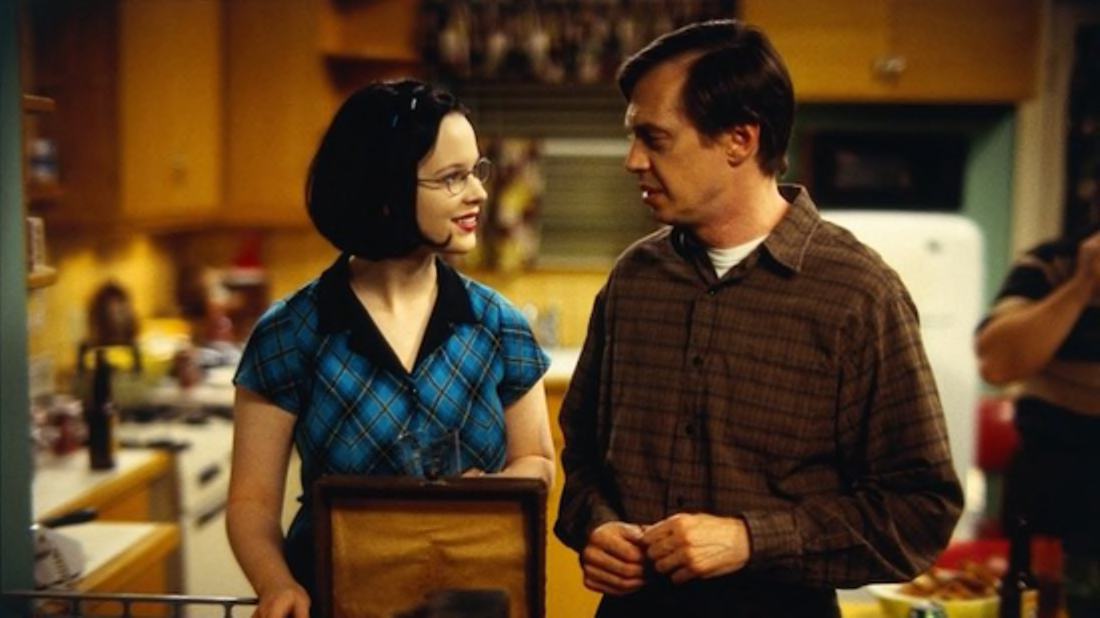
Ghost World (Terry Zwigoff – 2001)

Image result for GHOST WORLD

Ghost World is a brilliantly honest coming of age story, unique in its acknowledgment of the ambiguity and disillusionment that comes with the transition into adulthood. Sarcasm and commentary on the creative lifestyle abound. Need I say more?

(P.S. I already have: https://viewkid.family.blog/2019/12/31/ghost-world/)

MVP: Steve Buscemi as lonely eccentric.

MVQ: “Now I remember why I haven’t been anywhere in months. I just – I can’t relate to 99 percent of humanity.”

The Big Lebowski (Joel and Ethan Coen – 1998)

Image result for the big lebowski

At first glance, The Big Lebowski appears to be a film about a man seeking compensation for a soiled rug. For that reason, I delayed watching it for years, anticipating that it would be difficult viewing.

In actuality, The Big Lebowski is a pleasure to watch. This is largely because it allows the audience to inhabit the headspace of the Dude, who moves through life unperturbed by external events and material losses. In seeing the world from the Dude’s perspective, the viewer is encouraged to avoid getting caught up in the frustrations of daily life and instead cultivate inner contentment, or at least a more laid back attitude. In some ways, the film is disorienting because of the many repetitions in dialogue and setting. I believe this is a conscious choice by the Coens, intended to bring the audience further into alignment with the Dude by emulating the echoes and flashbacks that would be rife in the mind of a 48 year old stoner.

Some critics suggest that in seeking compensation for his rug, the Dude is expressing a latent desire for order and meaning. I disagree with this interpretation. The Dude’s uncharacteristic attachment to the rug is what embroils him in a string of calamitous events that test his equanimity. In my view, this is intended to convey that suffering is caused by attachment to material objects. The Coen brothers have rejected the notion that the film is conveying any particular message, so there is no definitive answer here.

This film inspired me to try my first White Russian (or as it is jokingly called in the film, a Caucasian) the following day. Unfortunately, I had an allergic reaction to the beverage and fainted in my driveway before being taken to hospital. I will therefore always have a strong sense memory associated with The Big Lebowski.

MVP: Jeff Bridges as pyjamaed hero.

MVQ: “Smokey this is not ‘Nam, this is bowling. There are rules”

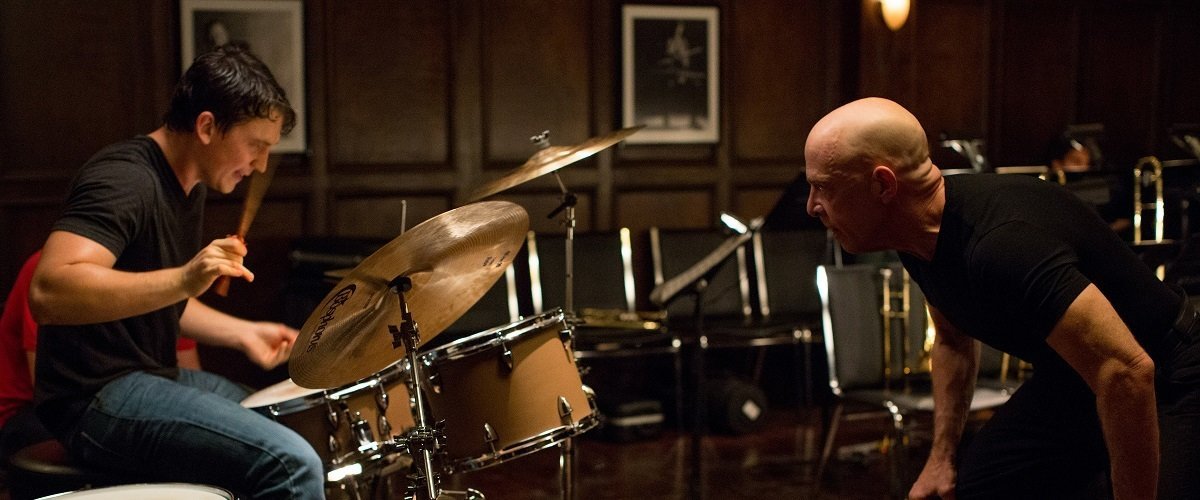
Whiplash (Damien Chazelle – 2014)

Image result for Whiplash

Whiplash was one of those movies that made me feel seen, as it captured something I had felt but never seen articulated so effectively – the relentless pursuit of excellence, to the extent that it consumes every aspect of one’s life.

I was deterred from watching Whiplash for many years despite hearing positive reviews, because I knew it’s subject matter was something in which I have no interest – drumming. However, upon watching I realised that this film isn’t really about drumming. In fact, it honestly could have been about anything – the drumming is merely a platform to convey a message.

MVP: J.K. Simmons as the teacher from hell (although I secretly wish I had a teacher who pushed me to these levels of excellence and insanity)

MVQ: Get the fuck out of my sight before I demolish you!”

Eagle vs Shark (Taika Waititi – 2007)

Image result for eagle vs shark

Taika Waititi is undoubtedly one of my favourite directors. It took me a long time to finally watch Eagle vs Shark because it is his least well-reviewed film; however, upon watching, I was happy to discover that it is fantastic and gravely underappreciated.

Eagle vs Shark may be less popular because the characters are so painfully awkward that the story only resonates with extremely awkward viewers. For those of us who can relate, it’s the kind of film that makes you feel okay, ecstatic even, about being a weird person.

I personally loved how unabashedly odd this film is. In Eagle vs Shark, Waititi imagines up a world that is sweetly naive and non-judgmental. When Jarrod complains that he is a loser, Lily acknowledges that this is true yet accepts him nonetheless. In that way, Eagle vs Shark gives its characters permission to be who they are, even if they suck sometimes.

MVP: Jemaine Clement as vengeful nerd and worst boyfriend of all time.

MVQ: I’m so complex!”

Psycho (Alfred Hitchcock – 1960)

Related image

I reluctantly watched Psycho because it was assigned as homework for my screen media class. Never has reluctance transformed so swiftly into enthusiasm! I expected that it would feel stale, having been released in 1960; however, it felt sleek and relevant. The cinematography remains innovative and the concepts explored still resonated in 2019.

No one prepared me for how much I would like Norman Bates. I had always assumed he would be portrayed as a despicable murderer. Imagine my surprise when he appeared on screen as a gently spoken and loveably awkward young man, with a healthy fascination with taxidermy.

My favourable impression of Norman Bates wasn’t diminished after he is revealed to be murdering people while dressed as his dead mother. As Norman says early in the film “we’re all in our private traps”. Norman’s trap is clearly the enduring impact of a traumatic past. In what is perhaps the most evocative analogy for enmeshed parenting ever depicted, the embittered voice of Norman’s deceased mother has merged with his own internal dialogue, eventually overcoming his autonomy.

MVP: Anthony Perkins as endearing serial killer.

MVQ: We all go a little mad sometimes”

I evidently love a movie about an outsider; whether they be an angsty teenager, a serial killer or a man-child hung up on his childhood bully. Here’s hoping that 2020 brings even more films filled with social outcasts and rejects for me to dissect and relate to.

Crumb – The Stuff of Nightmares

I felt uncomfortable watching Crumb. I felt uncomfortable as I looked for a picture of Crumb to include in this review (his comic depicting the rape of a headless woman was ubiquitous irrespective of how I phrased my search query). Everything about Robert Crumb makes me uncomfortable. As an eccentric and a creative, I identify with him. As a female, I find him kind of frightening. On a more general note, I was disturbed by seeing the unique misery of a nightmarish childhood so well articulated in this documentary. It really made me feel something, and although those feelings were mostly negative (i.e. horror, disturbance, fear) this film really is a remarkable achievement.

So much of what was documented by Zwigoff in Crumb could not have been fabricated for the purposes of directing a fictional movie. Or at least if it were, I don’t know that I could have retained my willing suspension of disbelief. I went into the film expecting to learn about Robert Crumb’s creative process. Instead, I found myself gripped by a psychological deep-dive into a highly dysfunctional family.

Image result for robert crumb

There was so much honesty in this film – honesty about some of the greatest miseries of the human experience. And yet, much of it was related with a laugh or a chuckle. There were a number of scenes that I had to re-watch, given the easy manner in which travesties were related.

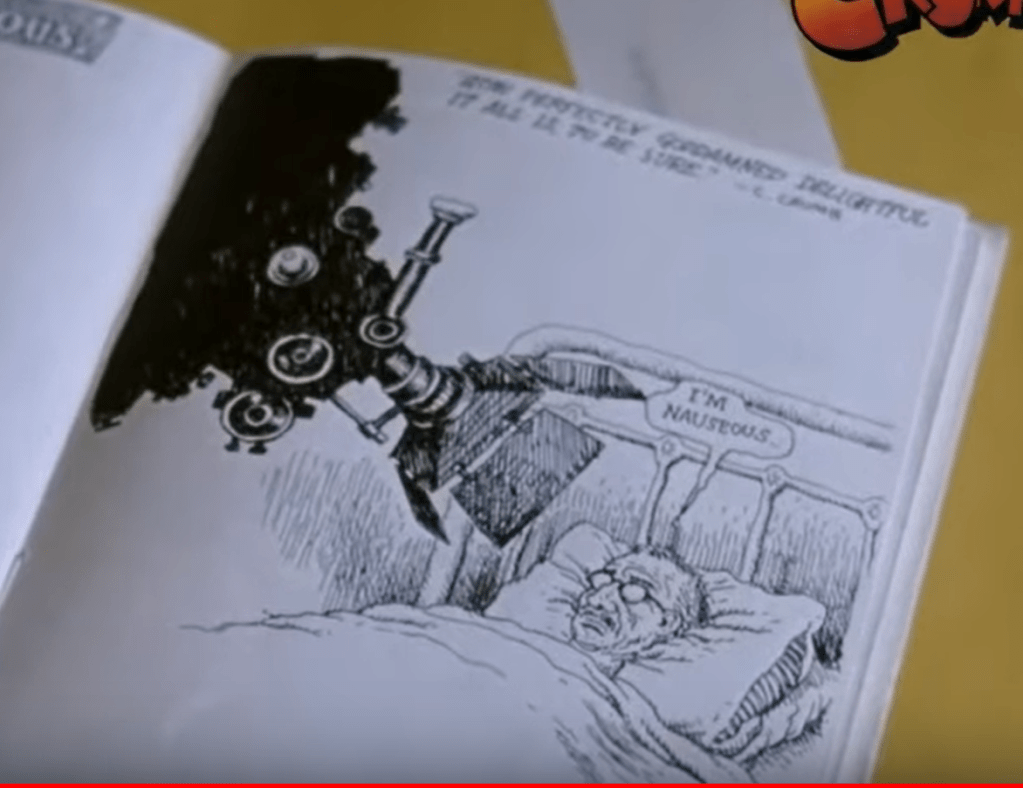
I was amused when Robert Crumb presented his comic depicting how he felt during the filming process. The caption “How perfectly goddamned delightful it all is, to be sure” is a catch-phrase coined by Robert’s brother, Charles Crumb. This could be said to capture the Crumb family attitude – ironic acceptance of one’s situation, given the futility of resistance.

I mentioned that I find Robert Crumb frightening because I am a female. There is a unique type of disturbance one feels at being simultaneously an object of hatred and lust. Crumb is forthcoming about what he terms his “hostility towards women”. There is a remarkable scene in the documentary where his former partner is discussing the breakdown of their relationship. In response, Crumb laughingly says “do you think I’m sadistic?” and grabs her roughly by the face. I was at once shocked and intrigued. I am still reeling that, of the Crumb family, Robert Crumb is the most well-adjusted.

Despite the discomfort some of us feel about Crumb’s depiction of violence and sexual deviance in his artwork, the fact that it evokes such a strong response suggests that it communicates an evocative, perhaps universal, message. Indeed, in portraying his most depraved and outrageous ideas and thoughts, Crumb is doing what all great artists must do – expressing his true nature.

I see Crumb as a meditation on what circumstances give rise to the creative impulse. The art that the brothers – Maxon, Charles and Robert – produced felt necessary and driven, not the product of a fun pastime. It is often said that art is life-giving, but this film would never let its audience be so idealistic as to believe that. As Robert Crumb says “I start feeling depressed and suicidal if I don’t get to draw. But sometimes when I’m drawing, I feel suicidal too”.

Ghost World

I watched Ghost World this week as part of a Terry Zwigoff film review. The film is adapted from a graphic novel written by Daniel Clowes and follows the life of 18-year old Enid Coleslaw following her graduation from high school. It is notable that Enid Coleslaw is an anagram for Daniel Clowes, thereby suggesting that the source text is somewhat autobiographical. I found this particularly interesting, given that Enid is portrayed as a precocious asshole. Perhaps Clowes is demonstrating some self-reflection here, or providing a social commentary that we are all assholes in some way.

Ghost World‘s closest antecedent is The Catcher in the Rye in that Enid, like Holden Caulfield, struggles with the phoniness of the adult world that she is expected to transition into. Accordingly, the film deals with the question of how much authenticity one should compromise in order to function as part of society. This makes the film essential viewing for creative types, who often struggle to preserve their unique voice while conforming to societal expectations.

Image result for ghost world

Enid is a valuable case study in this respect. She is so insistent on preserving her authenticity that she is incorrigible and unyielding, unable to hold down a simple job because she can’t censor her opinions. She regards the world around her with dissatisfaction regarding its lack of depth and demonstrates a level of world-weariness one would usually associate with an elderly woman. At the same time, Enid is conflicted because she doesn’t really know who she is. Her constantly changing wardrobe and hairstyles are a physical manifestation of her fragmented identity.

This outlook is reflected in the cinematography of Ghost World, which is rife with imagery that communicates oppressive suburban mediocrity and hollowness. Shots draw attention to extras engaging in mundane activities. Settings are bland and empty of life – strip malls and apartment complexes. An empty pair of jeans on the sidewalk simulate the human experience with no flesh or blood to substantiate them.

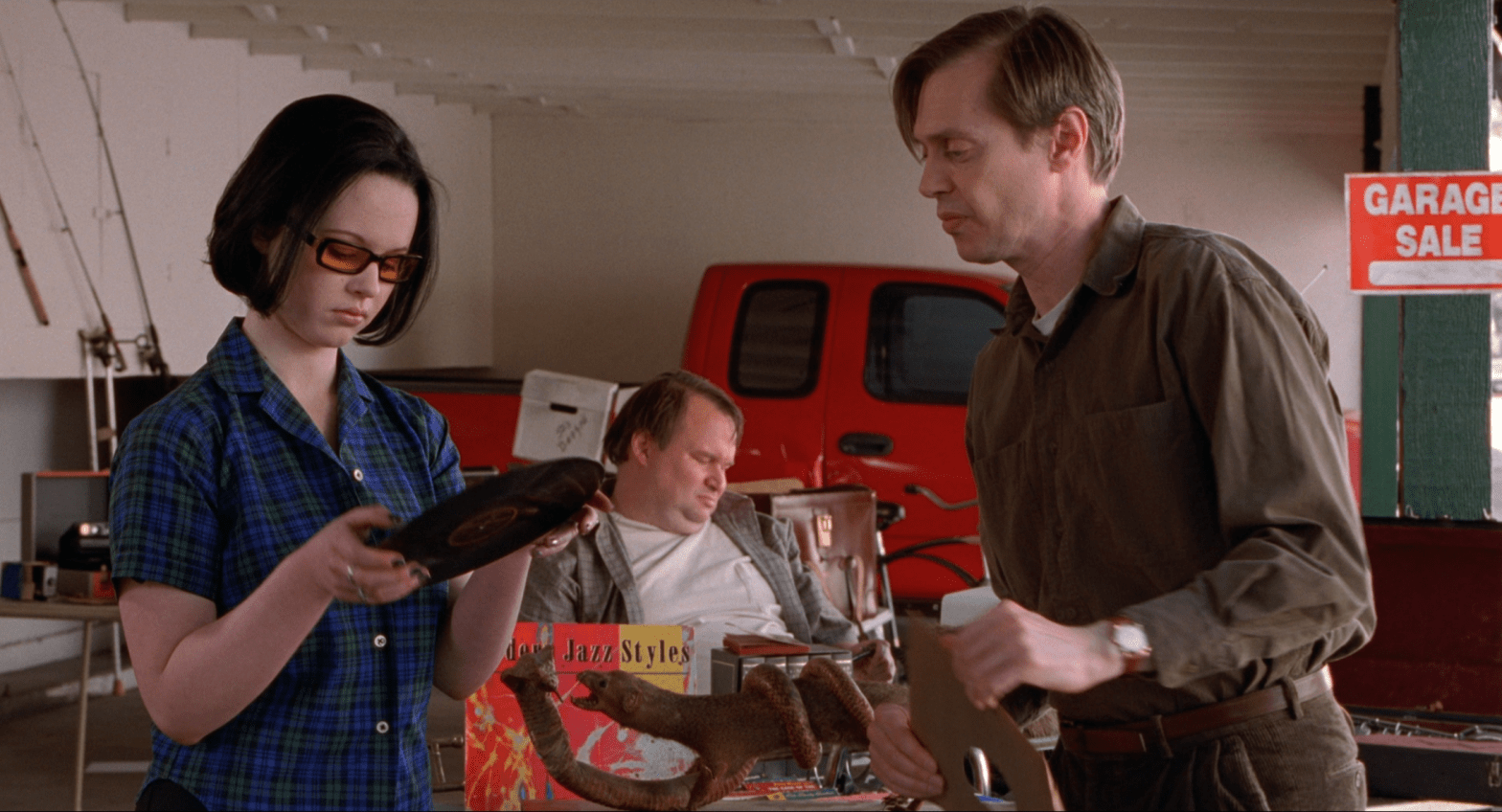
In her search for authenticity, Enid attaches herself to a disillusioned eccentric called Seymour, who collects old records and artifacts The relationship that develops between these two outsiders is portrayed brilliantly with humour and pathos. Enid praises Seymour as “the opposite of everything I hate”. He exhibits genuine emotion (usually anger), placing him in contrast to the emotionally passive and polite others who populate Ghost World. Further, his collection of antiques lends Seymour a connection to a culture of depth instead of modern consumerism.

Thora Birch’s portrayal of Enid as endlessly sarcastic and dead-pan, at once endearing and cynical, is fantastic. Steve Buscemi’s performance as Seymour is similarly brilliant. His listlessness and acceptance of futility is conveyed beautifully, with Buscemi’s very appearance lending a sense of weariness to the character.

Like many of Zwigoff’s films, Ghost World is about what it’s like to be a creative person in a world that celebrates mundanity. It is therefore fitting that Zwigoff makes numerous references to Robert Crumb throughout the film. Enid’s diaries are drawn by Sophia Crumb, diegetic music includes that of Robert Crumb and his Cheap Suit Serenades and a piece of art that is key to the film’s narrative is drawn by Crumb himself.

Ghost World doesn’t give us any answers on how to thrive as a creative, but it provides an interesting commentary on the costs and benefits of living a creative life. I would recommending watching this film in tandem with Zwigoff’s other pieces – Crumb (1994) and Art School Confidential (2006) – which expand further on this theme.

Jojo Rabbit – Anti-Hate in the Time of Hitler

When I attempted to explain the plot of Jojo Rabbit to a friend of mine, they found it difficult to understand how the events of World War II could be framed as a comedy. “I hate Nazis” was their response. I was reminded that the use of an ironic tone can divide audiences between those who comprehend the nuances of meaning and those that don’t. For that reason, I appreciate that some viewers may confound the historical context of the film with what it’s actually about – overcoming hatred and tribalism.

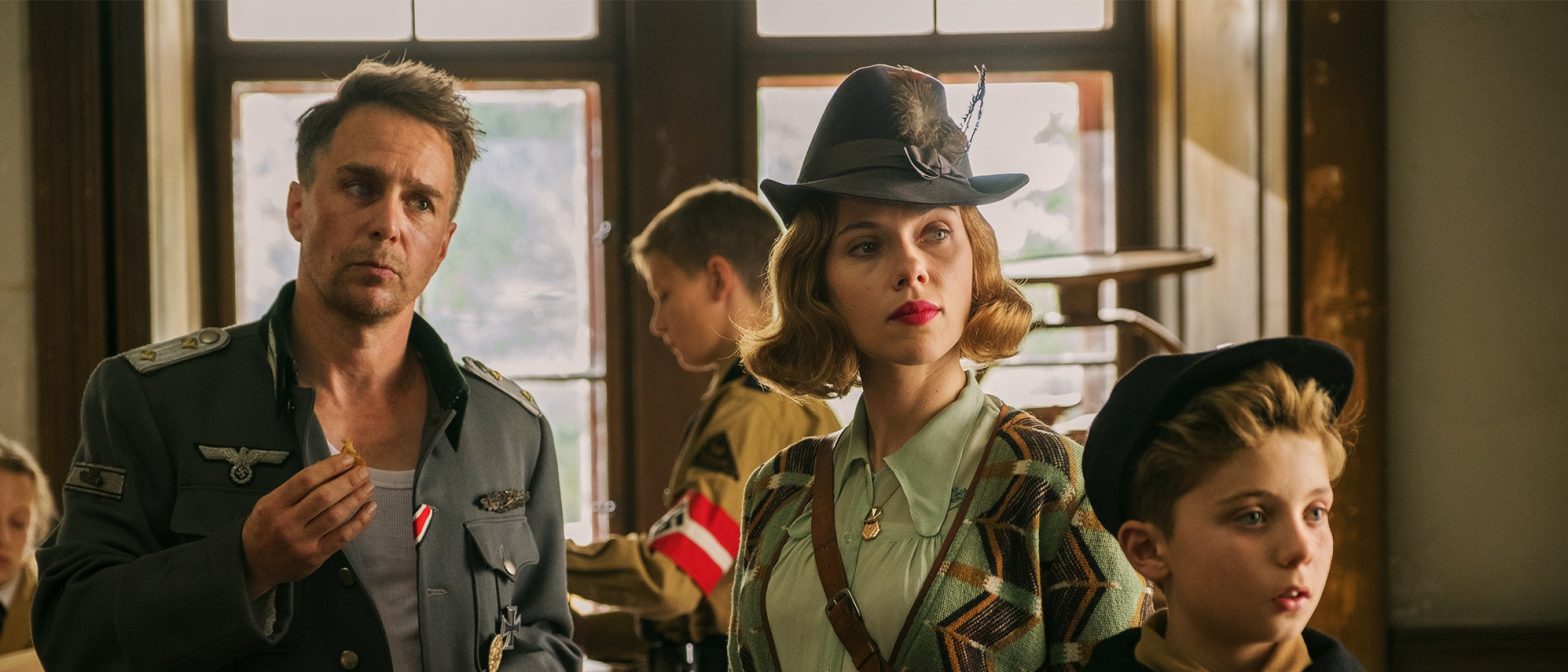
Jojo Rabbit combines Taika Waititi’s absurdity with the whimsy of Wes Anderson, culminating in a film that is at once strange and familiar. Its “melancomic” tone, which offsets irony and affect with sincerity and pathos, is certainly an Andersonian construct, as is the use of anti-realist settings to give the film a contained and artificial quality.

Image result for jojo rabbit

However, Waititi differs dramatically from Anderson in the niceness and likeability of characters who, in Anderson’s hands, would most certainly have been depicted as precocious and self-centred. Accordingly, sympathy – particularly towards Jojo himself – is more strongly felt here than in any of Anderson’s films. This can perhaps be attributed to Waititi’s masterful ability to inhabit the head-space of a young boy. A memorable example is the following interaction Jojo has with his mother:

Rosie Betzler: Love is the strongest thing in the world.

Jojo Betzler: I think you’ll find that metal is the strongest thing in the world, followed closely by dynamite and then muscles.

The charming script is of course reliant on a wonderful performance by Roman Griffin Davis, who delivers the above line (as well as many others) with the absolute self-assuredness that young children possess.

Waititi has said that Fox agreed to distribute Jojo Rabbit on the condition that he portray Hitler, who is Jojo’s imaginary friend in this film. Waititi performs this role with commitment and zest. The character is so clearly a child’s understanding of who Hitler would be and is an evocative device for demonstrating how Jojo’s perception of the figure changes as the movie progresses. It is a window into Jojo’s interiority and understanding of the world around him. I particularly enjoyed watching the imagined Hitler become more menacing as Jojo learns more about the world. It reflects how we so often construct a vision of our idols, and how this changes based on our interactions and experiences.

Sam Rockwell and Alfie Allen gave strong performances as Captain Klenzendorf and Finkel, an eccentric pair who run the Hitler Youth training camp. I was particularly struck by how Captain Klenzendorf’s own disillusionment foreshadows the journey that Jojo himself will undertake . Meanwhile, Finkel’s character development can be observed in the periphery of many scenes, providing viewers with an enjoyable easter-egg type experience and lending a re-watchable quality to the film.

The decision to cast Stephen Merchant as a captain of the Gestapo was masterful. He is at once creepy and hilarious in this film- his very proportions lent his scenes a sense of physical comedy. In the theatre where I saw Jojo Rabbit, the audience began laughing as soon as he appeared on screen.

Jojo Rabbit is a success. It is hilarious and warm, and I will always hold a special place in my heart for a film that ends with children dancing awkwardly to Heroes, followed by an intriguing quote:

Let everything happen to you
Beauty and terror
Just keep going
No feeling is final

– Rainer Maria Rilke

Star Wars Episode IX – The Rise of Skywalker

Allow me to preface this review by stating that I enjoy every Star Wars film (yes, including The Phantom Menace and Attack of the Clones) and this was no exception. It was a highly entertaining romp that included many fun call-backs to service long-term fans of the franchise, from revisiting the ruins of the Death Star to seeing the return of Luke Skywalker’s X-Wing from A New Hope. That being said, The Rise of Skywalker suffered from indecision and inconsistency within itself and in the context of the Star Wars canon.

JJ Abrams was not expected to have further involvement in the reprised Star Wars series following his direction of The Force Awakens. This is painfully obvious in The Rise of Skywalker, which seems determined to disavow the developments of The Last Jedi – such as the romance between Finn and Rose, the use of force by laymen and Rae’s unspectacular parentage – in favour of a return to traditional form.

The Rise of Skywalker sees the return of Emperor Palpatine, who was believed to have been killed by Darth Vader in Return of the Jedi. While the return of a historical villain is itself indicative of the film being mired in the past, it is made more problematic given that it is revealed in the opening crawl, with no explanation of how it occurred, nor any comment on its significance.

In the course of the film, it is revealed that Rae is the granddaughter of Emperor Palpatine. This undermines the narrative development of The Last Jedi, which had sought to establish that Rae’s force ability was not genetic, thereby heralding the possibility that regular people could harness the power of the force. The Palpatine lineage also becomes a crux for poor storytelling, justifying underdeveloped plot points such as Rae’s proficiency with a lightsaber, despite her having no prior experience.

Additionally, The Rise of Skywalker suffered from the traditional flaws of most Disney films, being that there was a lack of stakes and that the desire to please the audience outweighed the need for narrative cohesion and originality. This was most evident in the multiple resurrections that occurred in the film, which robbed the audience of the opportunity to actually feel something.

Image result for kylo ren fixed helmet

The Rise of Skywalker was at its strongest when it focused on the relationship between Rae and Kylo Ren, and this is perhaps true of each of the new films in the reprised triad. This can be attributed to the sense of interiority of the Kylo Ren character – he has dimensionality, which makes him the most interesting person in a film that is populated with many stagnant personalities. Adam Driver carries the narrative tension of the film, as it is Kylo Ren who is truly torn between the light side and dark side. This is why it is so satisfying when we see him wield a blue lightsaber when he joins Rae in her battle against Emperor Palpatine. That being said, I am unsure that his turn to the light was truly earned, having been prompted merely by hearing his mother call him “Ben”, his true name.

In spite of the above, even Kylo Ren is not safe from the broad strokes of fan-service inherent to a Disney movie. After Emperor Palpatine has been destroyed, Rae is dead and Kylo Ren has survived. In many other films, this could be considered a bittersweet and impactful ending, which acknowledges the importance of sacrifice. However, Disney is insistent that the “hero” be preserved. Accordingly, Kylo Ren uses his remaining life force to resurrect Rae and dies in her stead, bringing the story back within the Disney framework. I was pushed beyond mere annoyance and into a blind rage when Rae and Kylo began to kiss as he was dying, thereby confirming a romance that had been highly sought after by many Star Wars fans.

The sheer level of on-the-nose wish fulfillment displayed here speaks to the detrimental effect of social media on our culture, at least to the extent that artists pay heed to what is voiced on these platforms. Great art (and therefore great film) requires the creator to express their true nature in a singular, cohesive vision. When the audience is allowed to influence the creative process, their competing opinions and ideas result in a highly-fragmented and ultimately incoherent piece of work.

Overall, while The Rise of Skywalker is an enjoyable cinematic experience, I am disappointed by what feels like a missed opportunity to expand on the Star Wars universe narratively and conceptually. Abrams’ desire to return to the status quo is, rather comically, made physically manifest in the poor reconstruction of Kylo Ren’s helmet, which had been shattered in The Last Jedi.

 This brings to mind Hannibal Lecter’s musings on entropy:

“you may see a cup of tea fall off a table and break into pieces…but you will never see the cup gather itself back together…the increase of disorder, or entropy, is what distinguishes the past from the future.”

The Last Jedi dismantled many of the assumptions that existed within the Star Wars canon and Abrams spends the entirety of The Rise of Skywalker attempting to reconstruct them. The law of entropy suggests things cannot be restored to their original state once they are broken. The Rise of Skywalker insists on trying to do this anyway, and this is why it is ultimately unsuccessful.