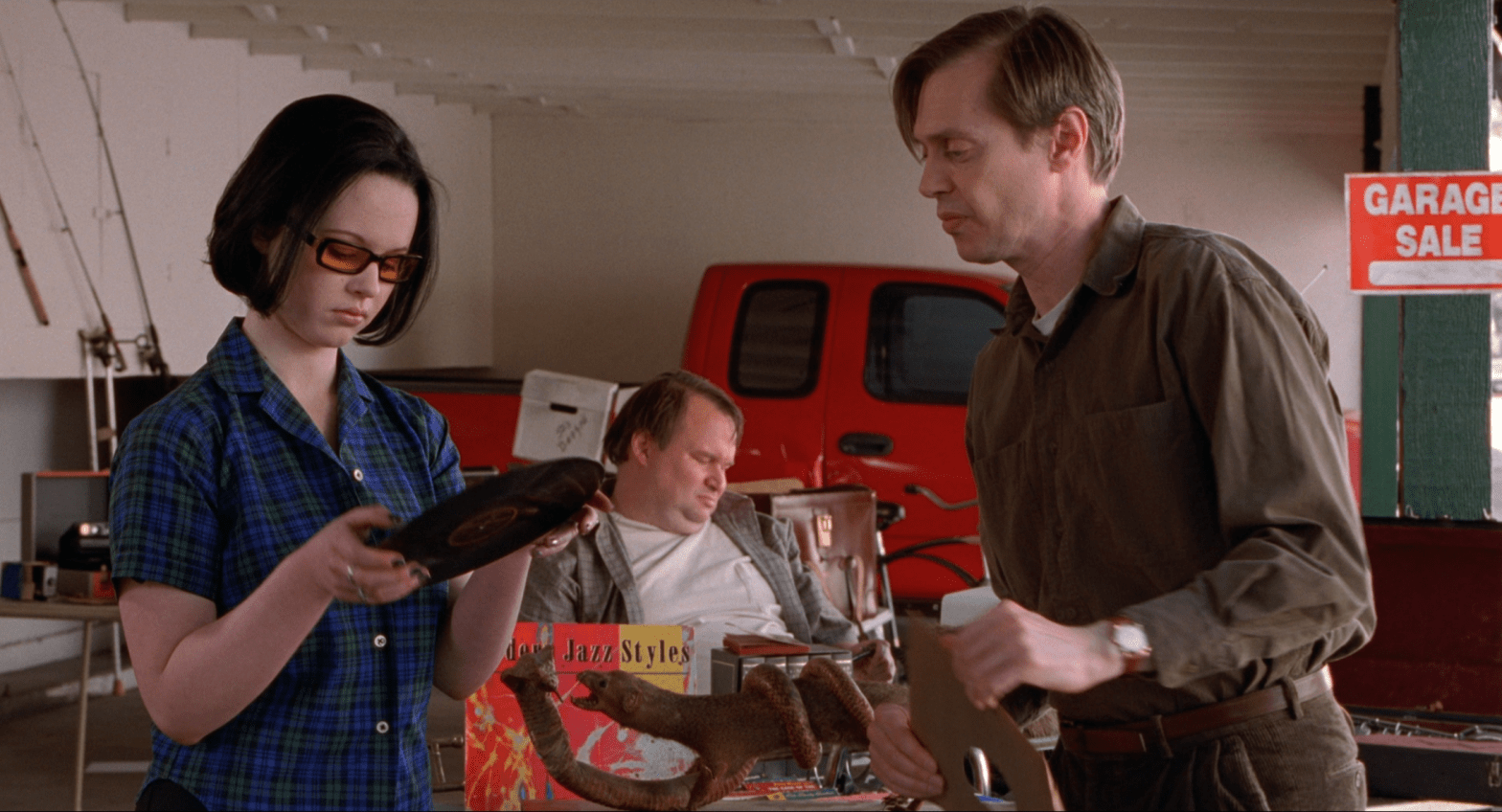
I watched Ghost World this week as part of a Terry Zwigoff film review. The film is adapted from a graphic novel written by Daniel Clowes and follows the life of 18-year old Enid Coleslaw following her graduation from high school. It is notable that Enid Coleslaw is an anagram for Daniel Clowes, thereby suggesting that the source text is somewhat autobiographical. I found this particularly interesting, given that Enid is portrayed as a precocious asshole. Perhaps Clowes is demonstrating some self-reflection here, or providing a social commentary that we are all assholes in some way.
Ghost World‘s closest antecedent is The Catcher in the Rye in that Enid, like Holden Caulfield, struggles with the phoniness of the adult world that she is expected to transition into. Accordingly, the film deals with the question of how much authenticity one should compromise in order to function as part of society. This makes the film essential viewing for creative types, who often struggle to preserve their unique voice while conforming to societal expectations.
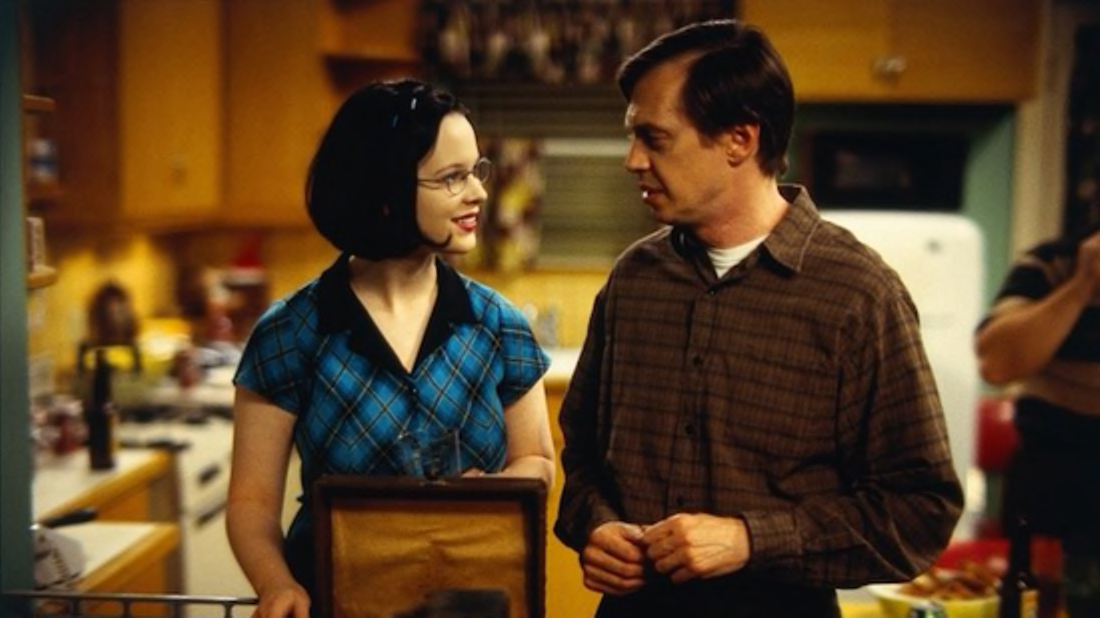
Enid is a valuable case study in this respect. She is so insistent on preserving her authenticity that she is incorrigible and unyielding, unable to hold down a simple job because she can’t censor her opinions. She regards the world around her with dissatisfaction regarding its lack of depth and demonstrates a level of world-weariness one would usually associate with an elderly woman. At the same time, Enid is conflicted because she doesn’t really know who she is. Her constantly changing wardrobe and hairstyles are a physical manifestation of her fragmented identity.
This outlook is reflected in the cinematography of Ghost World, which is rife with imagery that communicates oppressive suburban mediocrity and hollowness. Shots draw attention to extras engaging in mundane activities. Settings are bland and empty of life – strip malls and apartment complexes. An empty pair of jeans on the sidewalk simulate the human experience with no flesh or blood to substantiate them.
In her search for authenticity, Enid attaches herself to a disillusioned eccentric called Seymour, who collects old records and artifacts The relationship that develops between these two outsiders is portrayed brilliantly with humour and pathos. Enid praises Seymour as “the opposite of everything I hate”. He exhibits genuine emotion (usually anger), placing him in contrast to the emotionally passive and polite others who populate Ghost World. Further, his collection of antiques lends Seymour a connection to a culture of depth instead of modern consumerism.
Thora Birch’s portrayal of Enid as endlessly sarcastic and dead-pan, at once endearing and cynical, is fantastic. Steve Buscemi’s performance as Seymour is similarly brilliant. His listlessness and acceptance of futility is conveyed beautifully, with Buscemi’s very appearance lending a sense of weariness to the character.
Like many of Zwigoff’s films, Ghost World is about what it’s like to be a creative person in a world that celebrates mundanity. It is therefore fitting that Zwigoff makes numerous references to Robert Crumb throughout the film. Enid’s diaries are drawn by Sophia Crumb, diegetic music includes that of Robert Crumb and his Cheap Suit Serenades and a piece of art that is key to the film’s narrative is drawn by Crumb himself.
Ghost World doesn’t give us any answers on how to thrive as a creative, but it provides an interesting commentary on the costs and benefits of living a creative life. I would recommending watching this film in tandem with Zwigoff’s other pieces – Crumb (1994) and Art School Confidential (2006) – which expand further on this theme.


wow!! i really like how you dissect your film reviews. very neato.
LikeLiked by 1 person
Thanks! It means a lot to get some nice feedback 🙂
LikeLike
oops i mean dissect the films in your reviews :p oh well
LikeLiked by 1 person